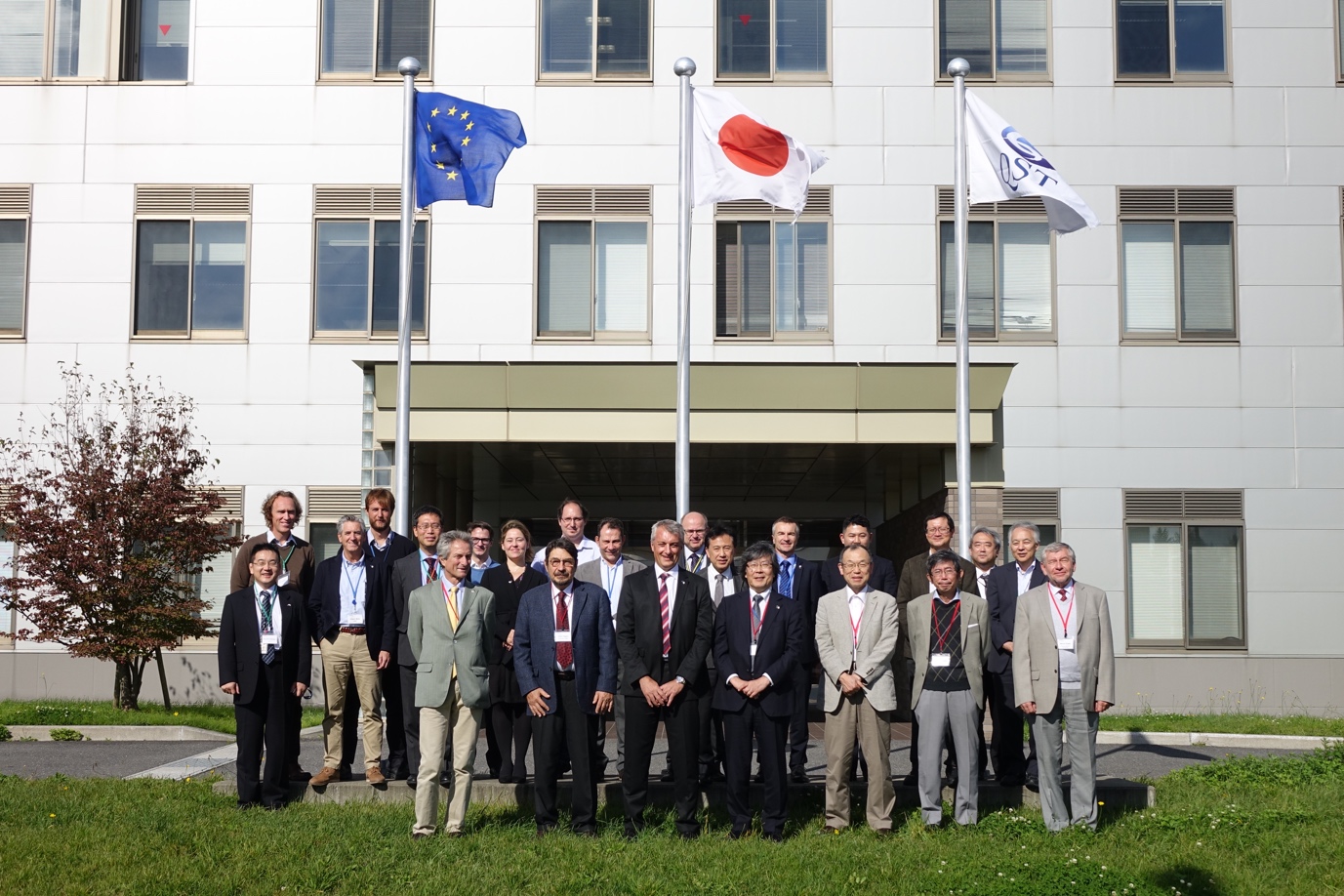
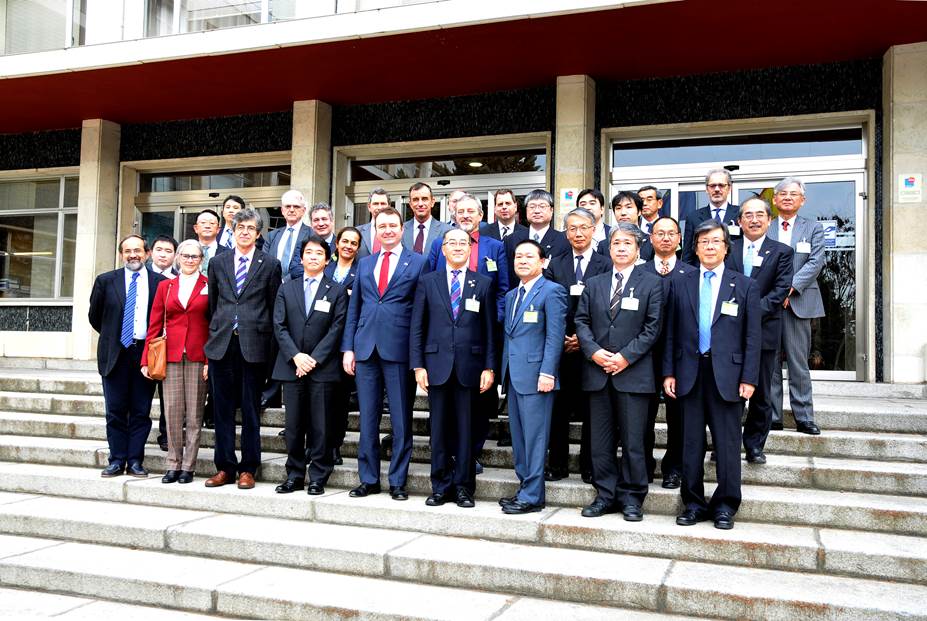
The 22nd Project Committee was held at Rokkasho IFERC Site on October 15th and 16th, during which an update of the project was presented as well as the outlook from 2019 onward.
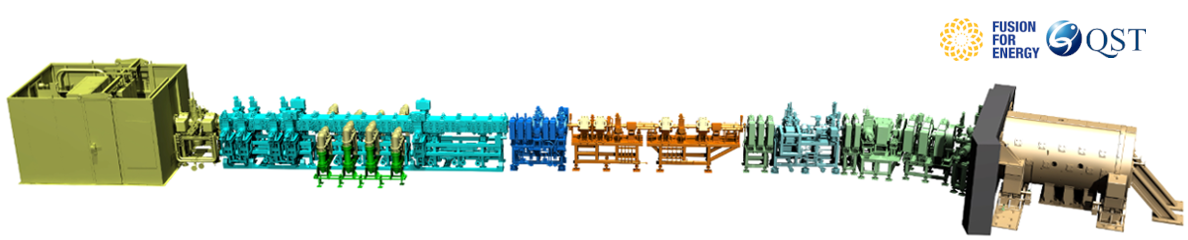
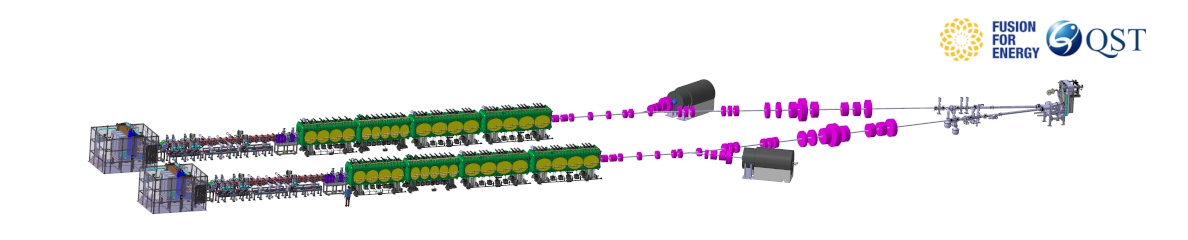
The main topics discussed were the progress since the last PC#21 with the first Beam Operation, the imminent resuming of the beam operation throught the RFQ and the preparation for the phase C with the delivery of the High Energy Beam Transport line and its Beam Dump as well as the assembly of the Cryomodule in the clean room at Rokkasho.
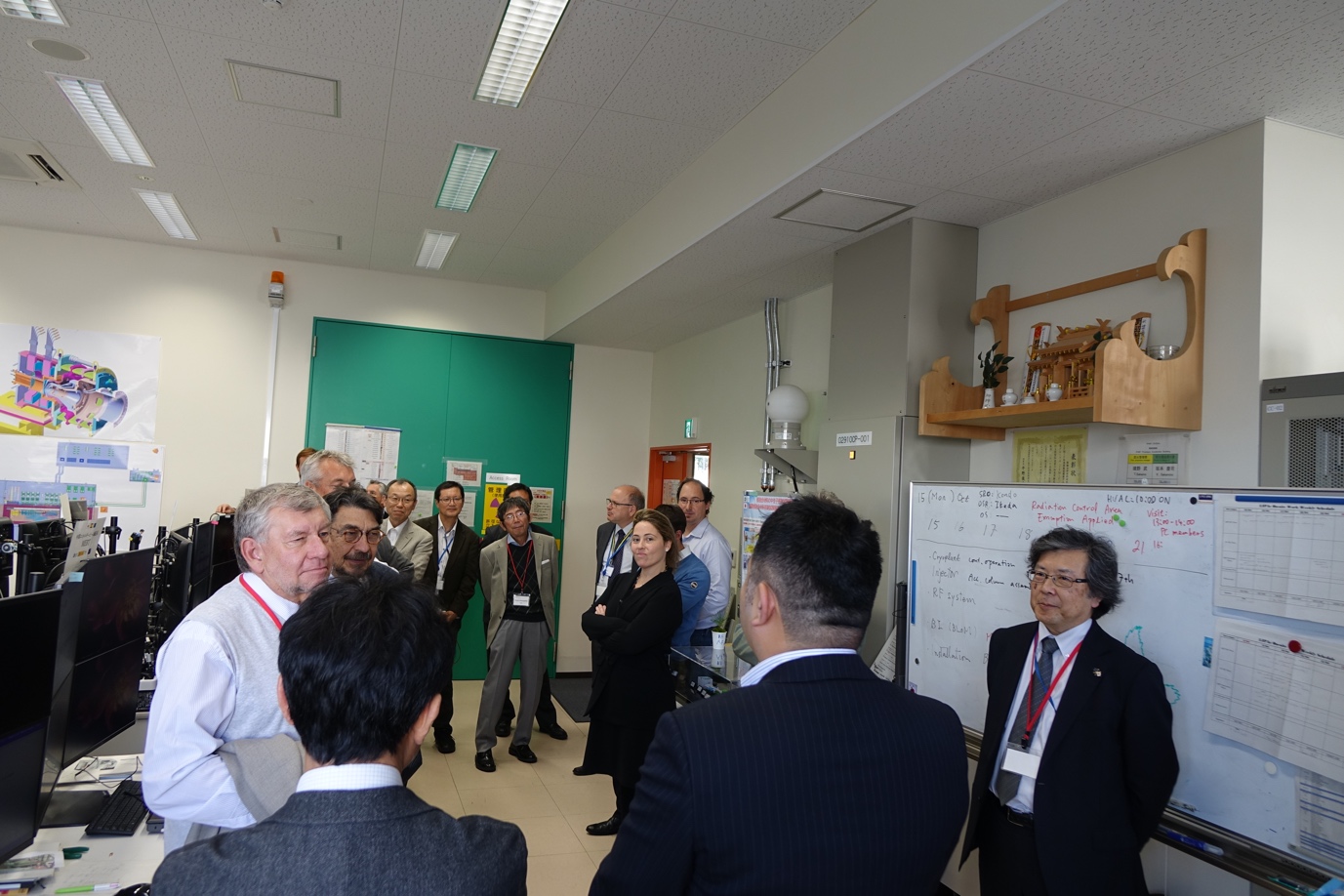
Attendees PC#22The PC members in the LIPAc Control Room
On 27 July 2018, from 4pm JST (9am CEST) a special broadcasting took place from LIPAc’s control room, with explanations, interviews to the LIPAc Operation Team staff about the different subsystems and the operational aspects. The engineers from Europe were also interviewed and presented their own institutes and expectations for the future.
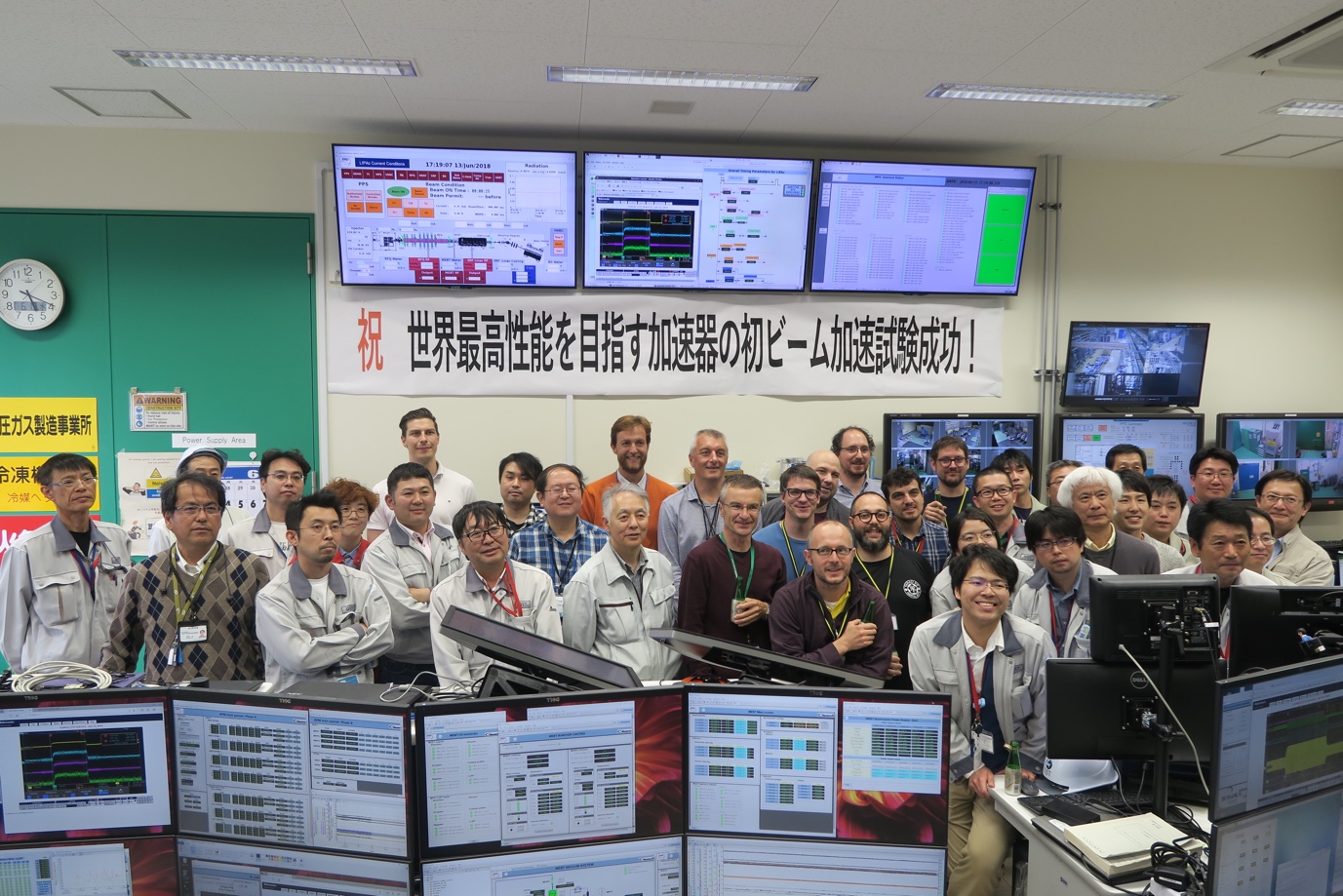
First proton beam injected into the RFQ on 13 June 2018!!!
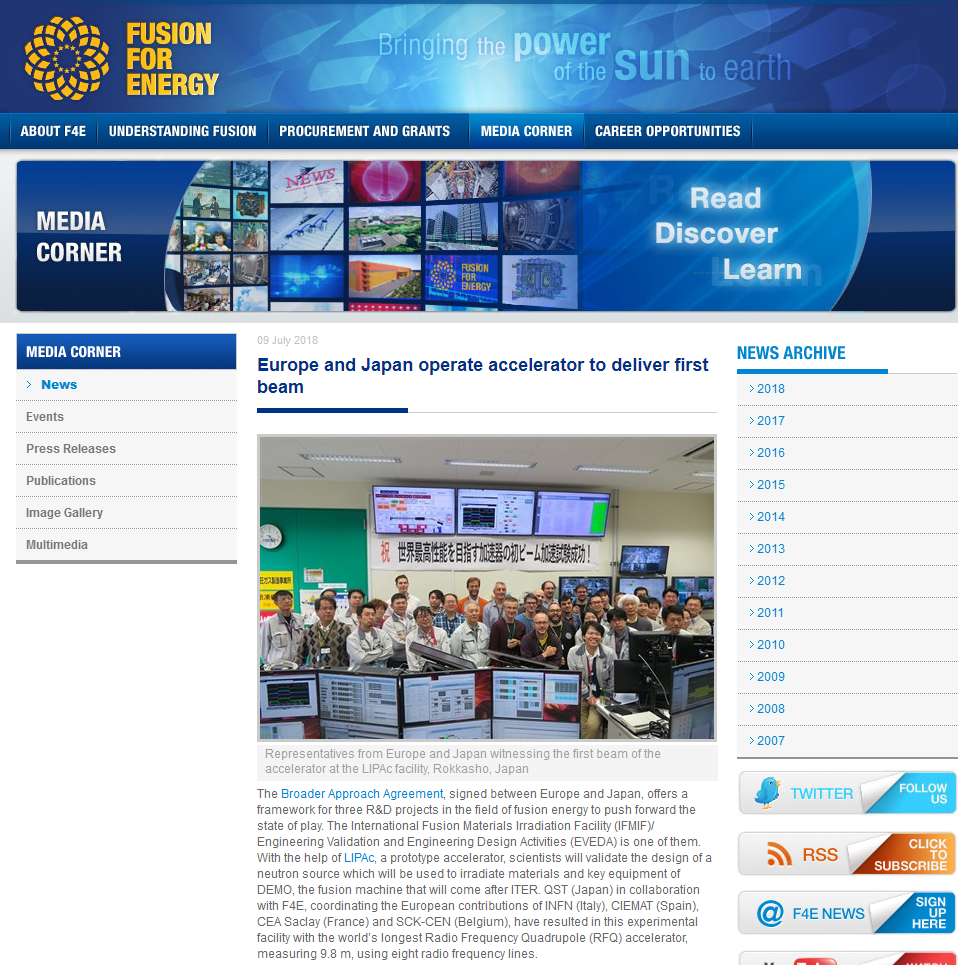
As a major milestone towards the validation of the IFMIF accelerator design, the first beam has been injected into the RFQ at the LIPAc (Linear IFMIF Prototype Accelerator) at Rokkasho on 13 June 2018.
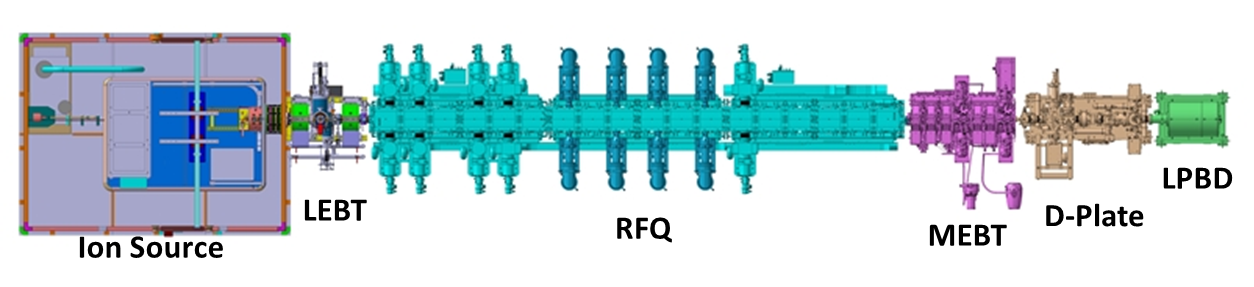
Phase B configuration (stage at 5 MeV with deuterons and 2.5 MeV with protons)
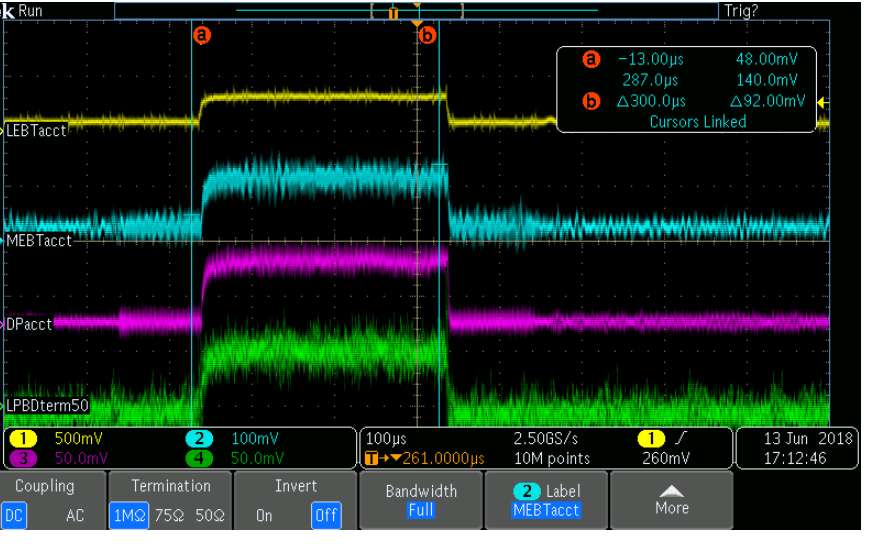
Injector LEBT output current~7 mA, Low Power Beam Dump current (LPBD) ~1.9 mA -> about 30% of total transmission
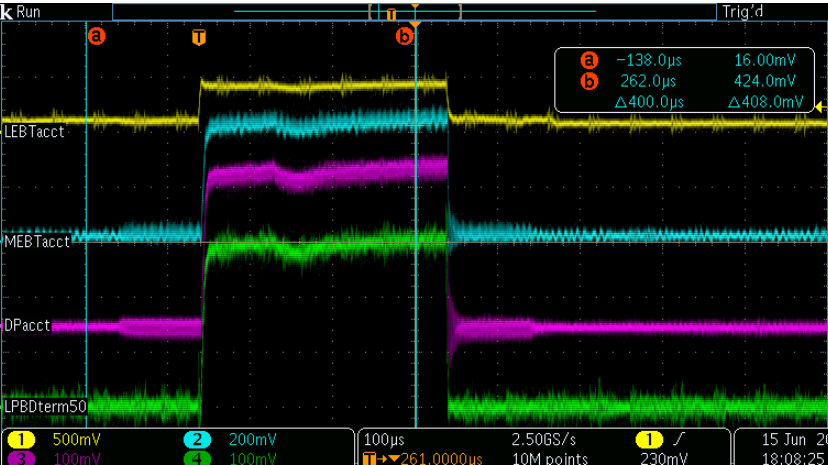
After some optimization, on Friday 15 June 2018 more than 80% of transmission in the RFQ was achieved.
Injector LEBT output current 7.4 mA, RFQ transmission > 80%
This first campaign consisting of the full characterization of the proton beam at low duty cycle, followed by an increase of the beam current up to 65mA, will last almost 8 weeks, and will be followed by the deuteron beam operation. Besides this important milestone being reached, LIPAc project will have to face other important challenges before the start of the next phase with the assembly of the SRF Linac at Rokkasho site and the installation of the HEBT/BD required to reach the final targeted 9MeV.
Congratulation to the LIPAc Operation Team!!!
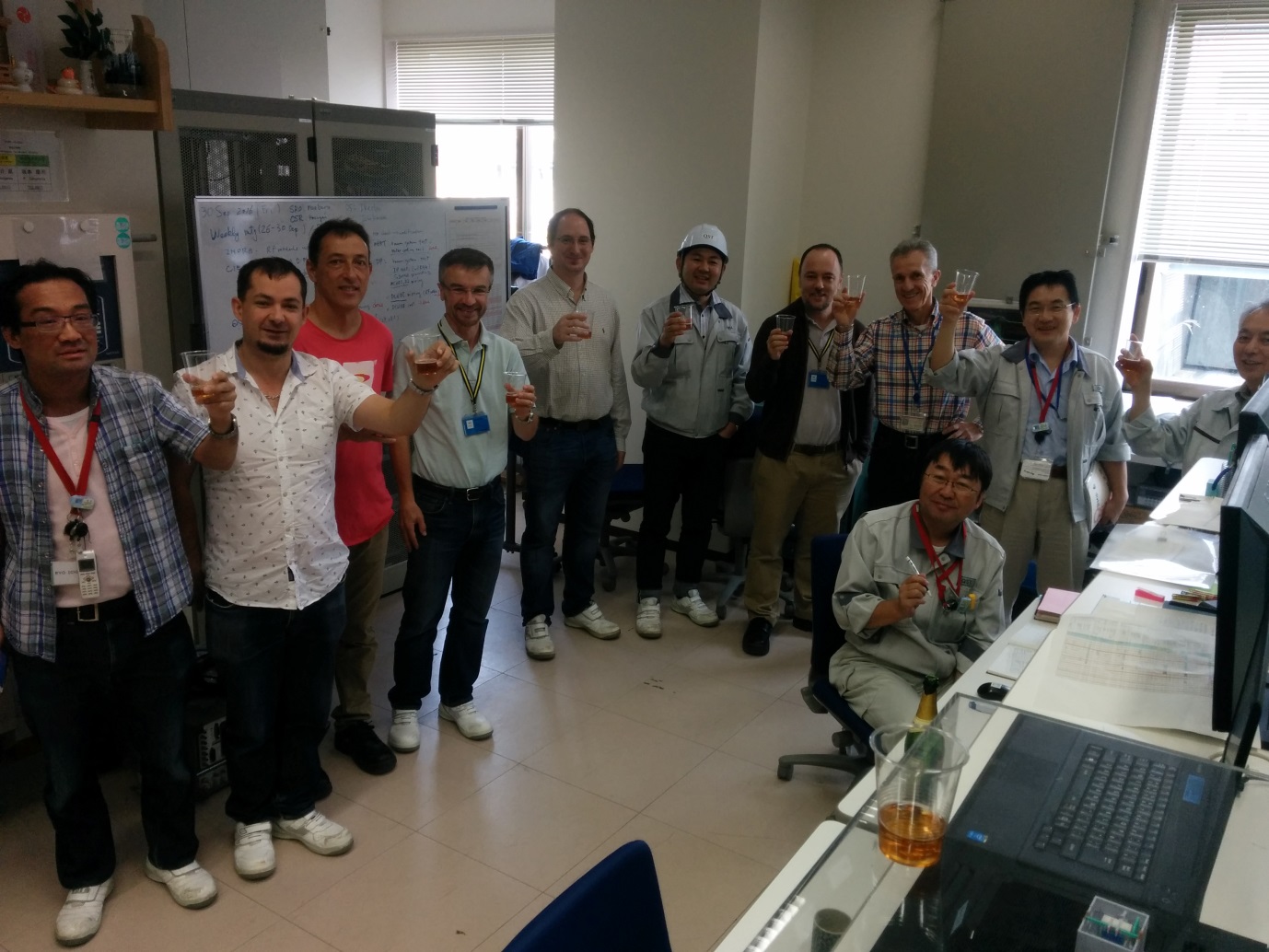
The international team of European and Japanese scientists and engineers celebrating this important milestone
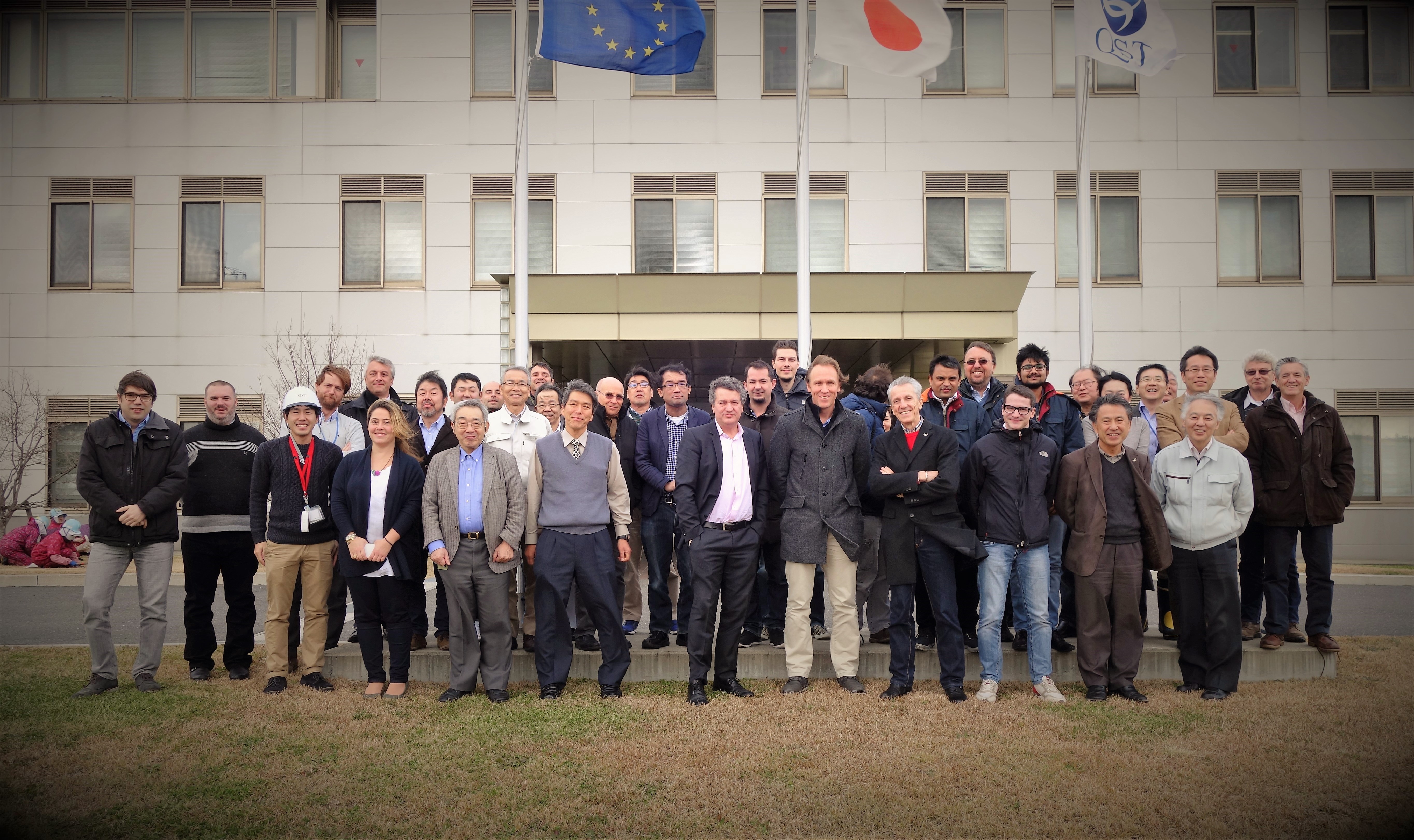
The tenth LIPAc Technical Meeting 10 (LTM10) was held in Rokkasho (Japan) from November 14th until 17th, where the current status of the design, manufacturing, installation and commissioning of the LIPAc accelerator’s components were discussed. More than 30 experts from laboratories in Europe, including CIEMAT (Madrid, Spain), CEA (Saclay, France) INFN (Legnaro, Italy); and Japan, including QST (Rokkasho, Japan) and KEK (on behalf of QST) attended the meeting, which was coordinated by the LIPAc Project Team and QST. In addition, videoconferencing was available to allow remote participation of EU colleagues who could not attend in person.
Detailed discussions were held to reach common agreement on the key technical issues that have arisen, and progress was reported on many aspects of the project. The following gives an overview of the progress made in key areas:
Injector:
Full commencement of phase “B” commissioning was announced, and the LEBT (Low Energy Beam Transport) was removed to allow final positioning of the RFQ. During the last campaign of Injector commissioning, a current of 112 mA with acceptable emittance in CW operation was achieved. While this falls short of the goal, this represents an excellent improvement. Further adjustments must be made to the accelerator column, followed by 24/7 beam extraction, to achieve the target parameters.
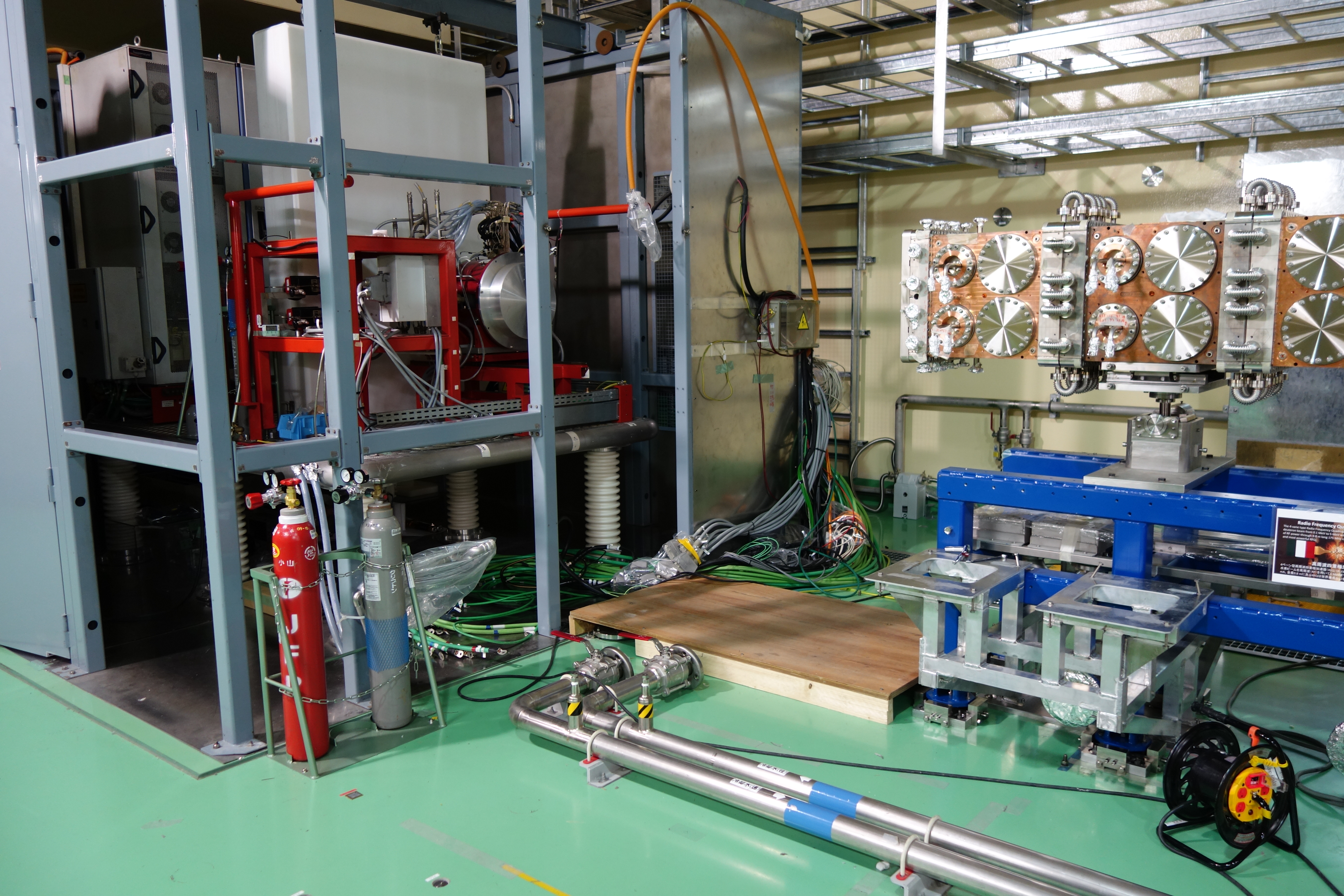
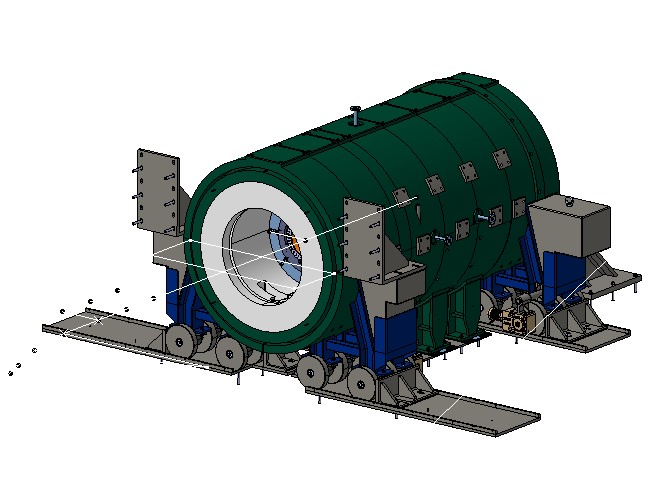
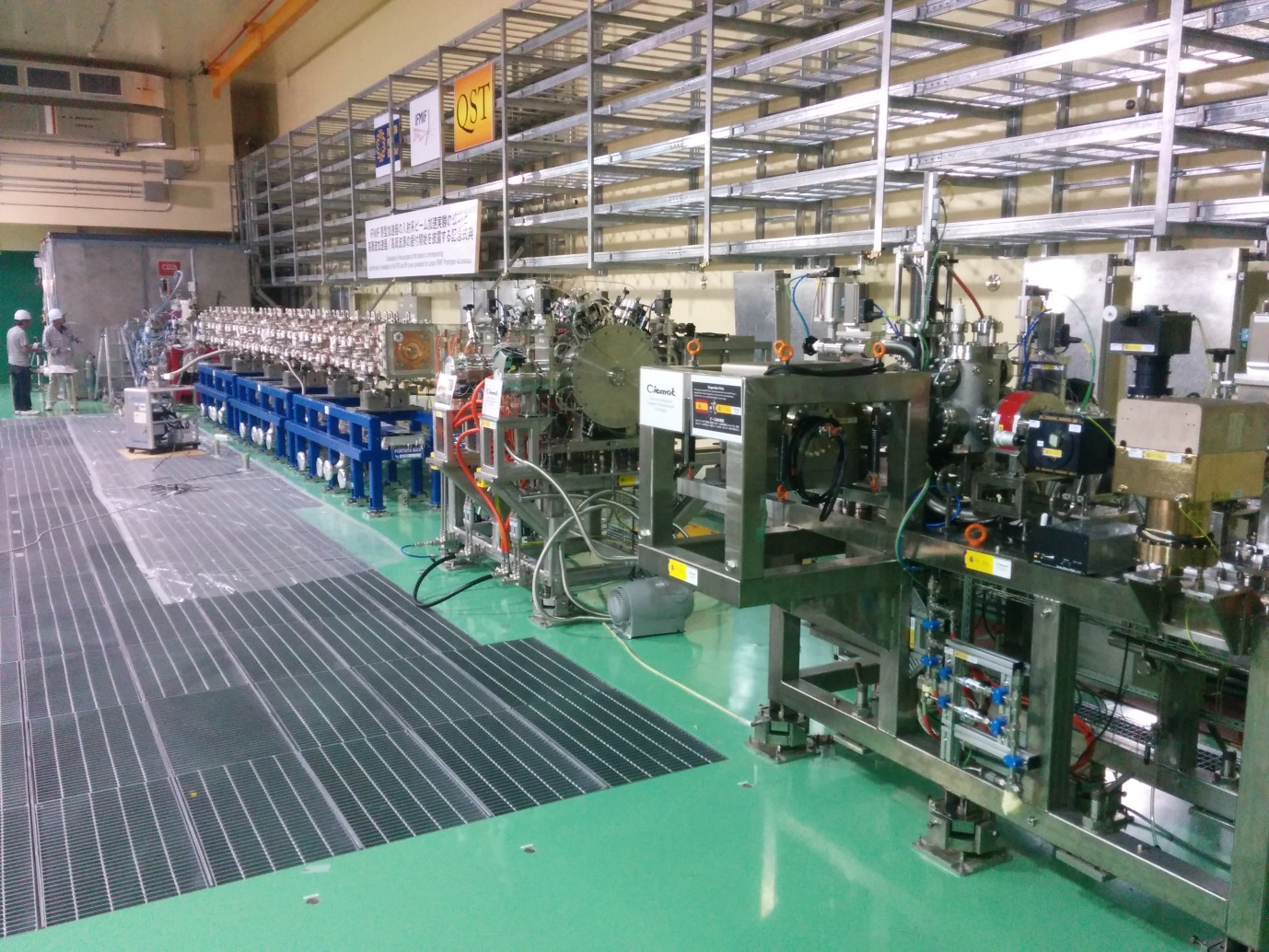
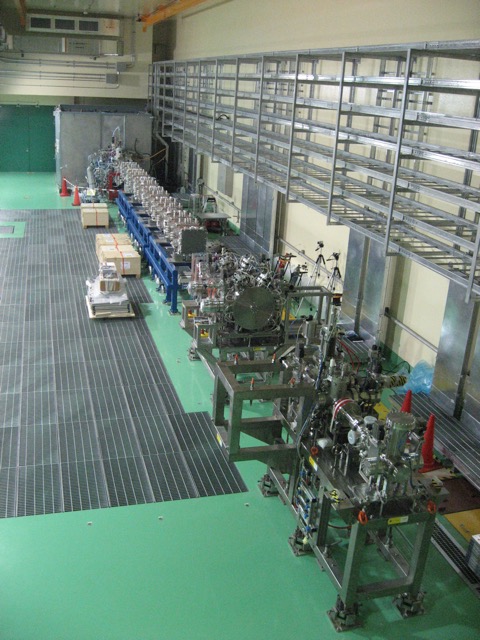
Injector configuration without LEBT, and RFQ (right) in its final position
RFQ:
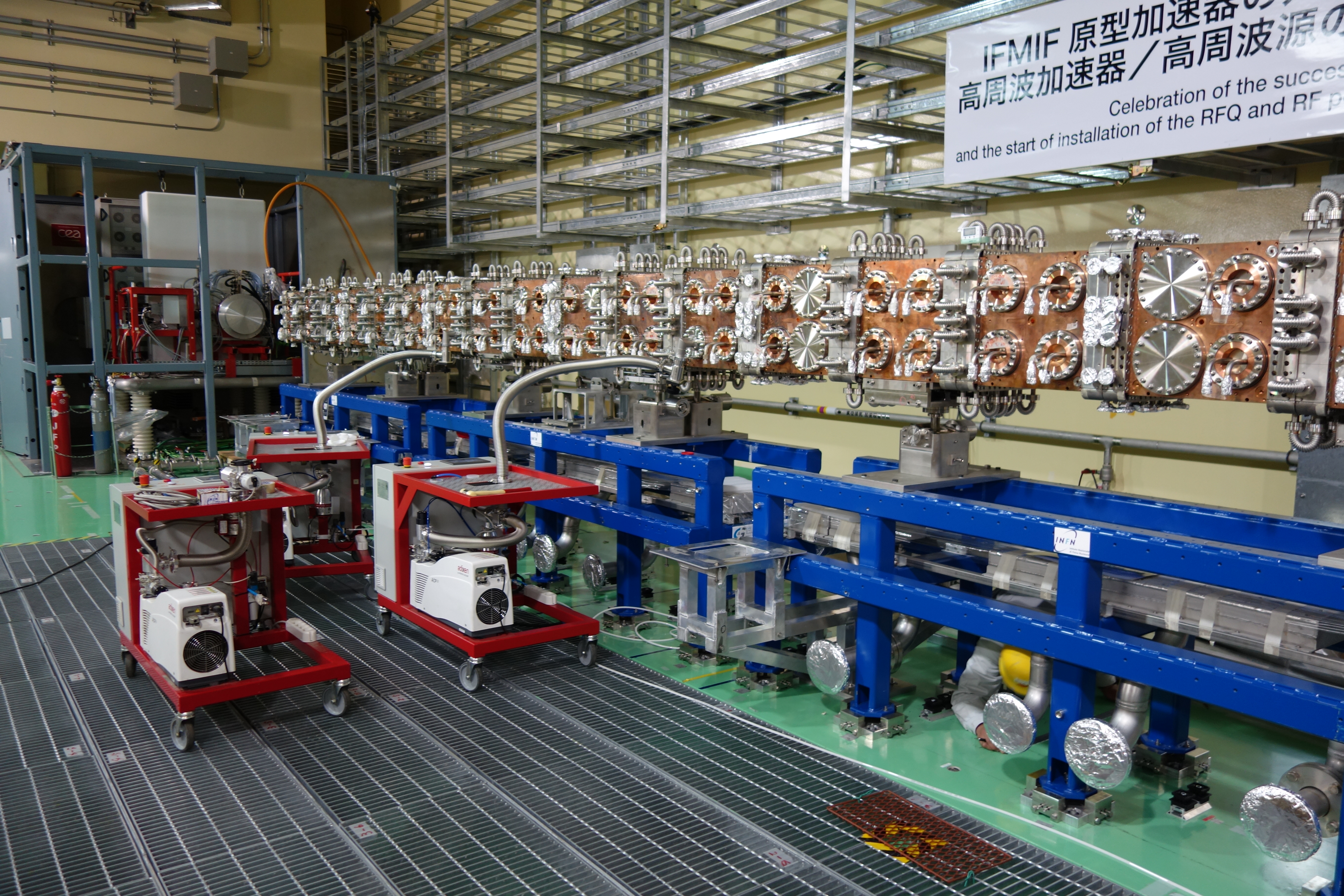
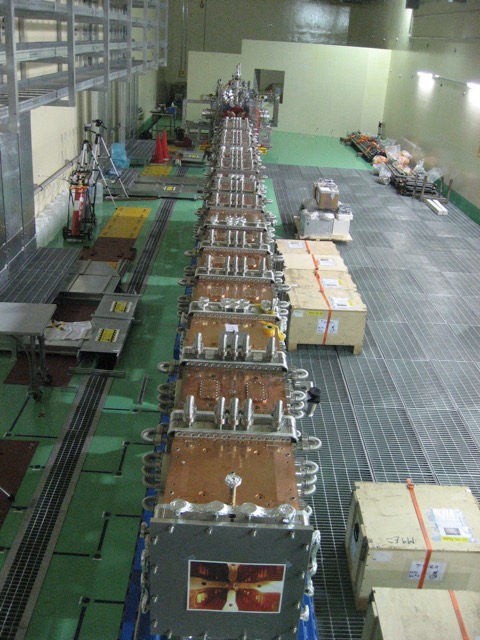
The bead pull measurements were successfully completed, and the final measured frequency was equal to 174.089 MHz. When scaled to the normal operating temperature of 20 °C and considering the effects of vacuum and beam loading, this is equivalent to 175.014 MHz. Following LEBT removal, the RFQ super modules were placed in their final position, and aligned within a tolerance of 50 µm. The RFQ was pumped down and the correct vacuum conditions for the three super-modules were achieved. The RFQ can now be baked-out before final assembly can proceed. Control cubicles and junction boxes were installed and are now being configured.
RFQ in final position
RF System and Coaxial lines:
Tangible progress was made since LTM09, which was held in April 2016. RF module 02 for the SRF LINAc was tested and sent to Saclay for Sathori test stand. After use in Saclay, it will be sent to Rokkasho for installation in Rokkasho. RF module 03 will be sent to Rokkasho on 30th of November 2016, together with the SRF LINAc coaxial lines, while RF module 04 is now in the final stages of preparation at Indra’s facilities, and is expected to be ready for shipment to Rokkasho in January 2017. The installation of the RF cooling system onsite is almost complete. The RFQ coaxial lines have been installed in preliminary position. Final positioning will be made after the connection is made to the RFQ.
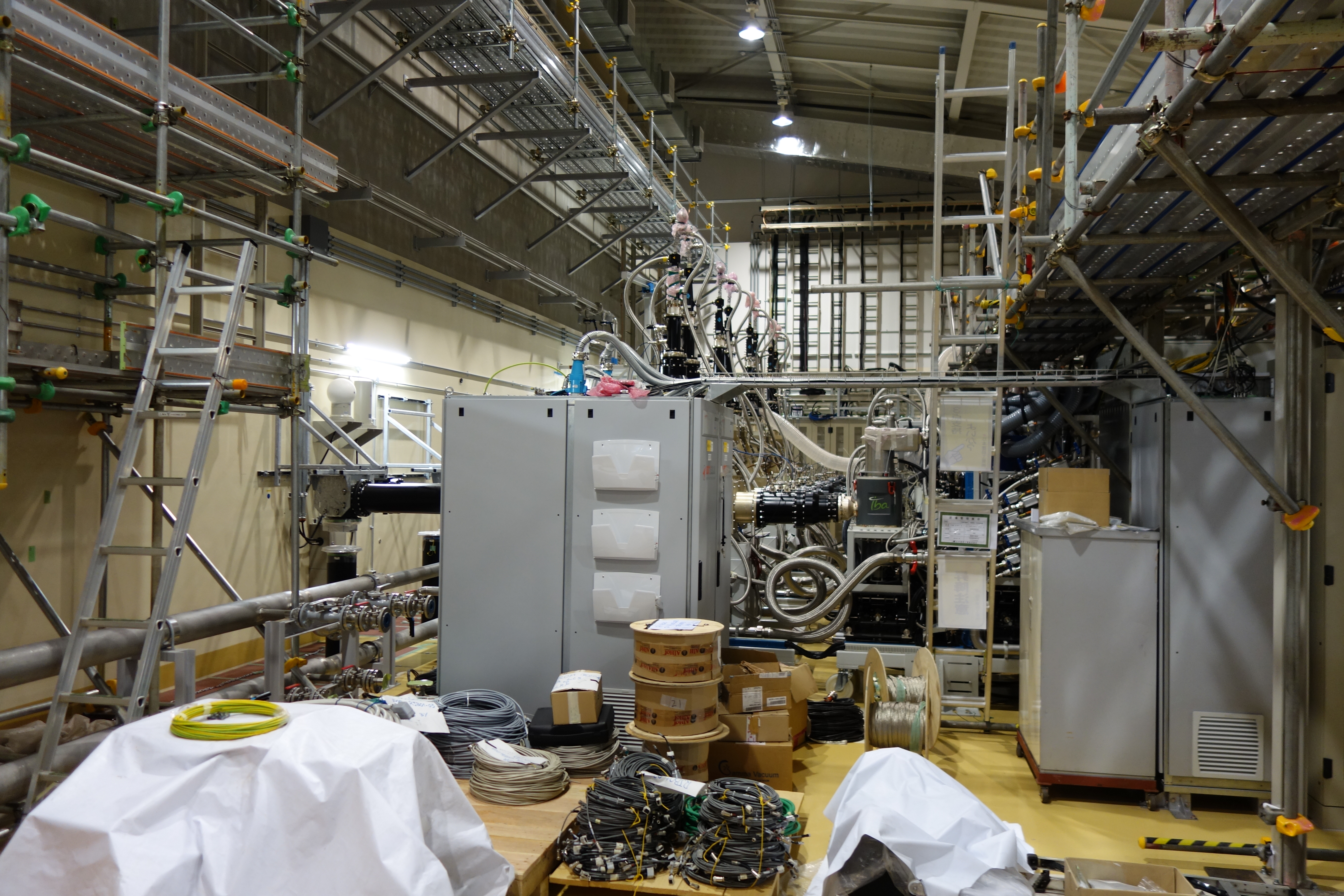
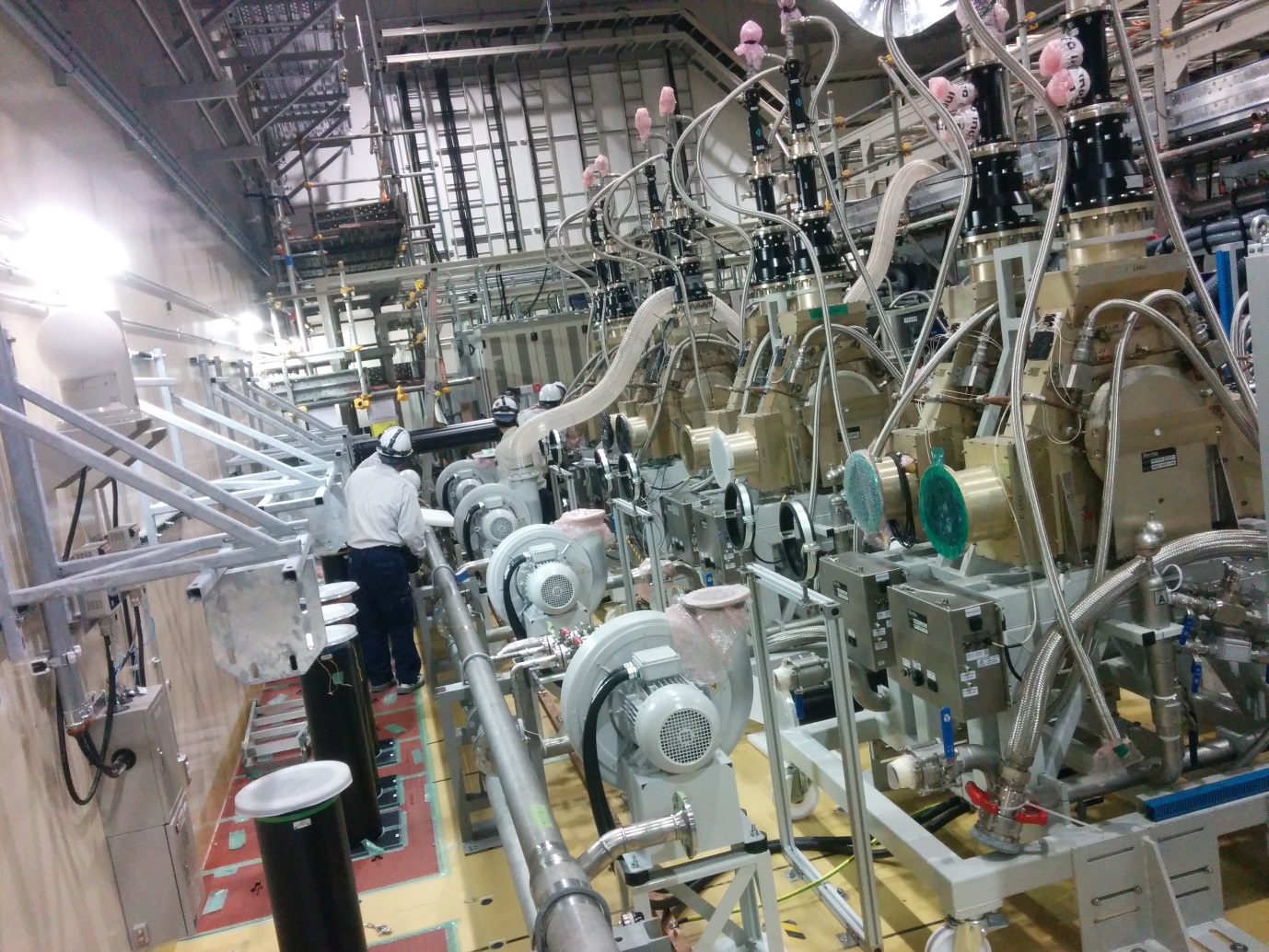
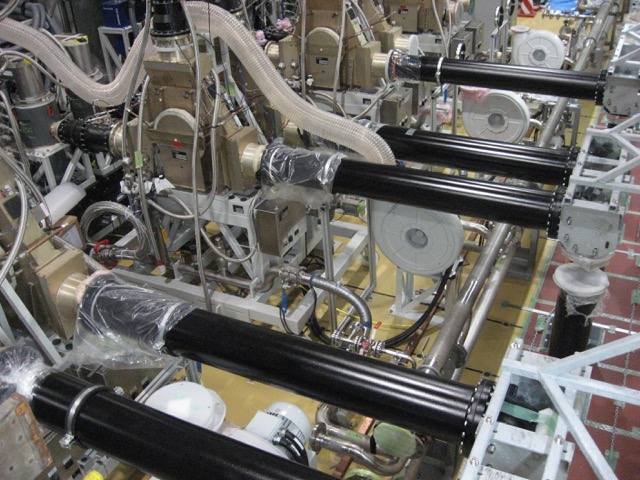
RF System view
MEBT and D-Plate:
Most of the installation and commissioning activities of the MEBT and D-plate were performed in parallel during pre-commissioning last summer 2016. Preparation for the next installation campaign already started with the objective to reach the LIPAc phase B configuration (Injector-RFQ-MEBT-Dplate and LPBD) next year. The displacement of the MEBT to its final position is planned beginning of 2017. Once it is validated by an alignment survey, it will be followed by displacement and alignment of the Dplate. Then the ancillaries (cabling, piping, compressed air and vacuum) will be installed on both equipment and tested. The integration of LCD into CCS will conclude this campaign; at least for these two accelerator components, driving to their check out and commissioning.
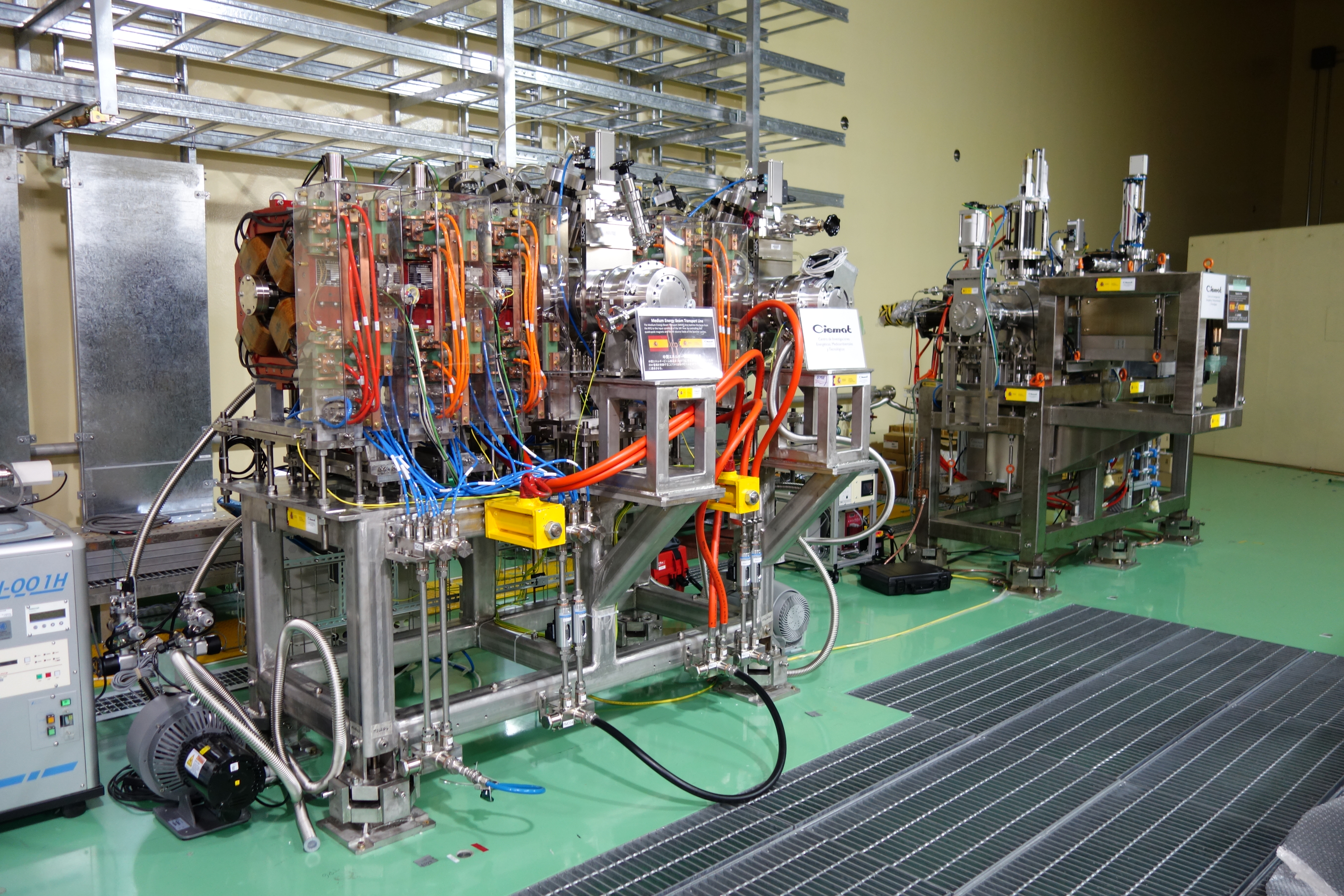
MEBT & D-plate in their temporary positions
SRF Linac and Cleanroom:
All the main components of the cryomodule are expected at CEA (Saclay, France) by the end of March 2017 and ready for shipment to Rokkasho by the end of April 2016. It was agreed that the assembly of the cryomodule will be performed at Rokkasho in dedicated clean room which will be available in Rokkasho by the end October 2017.
The Sathori test stand is prepared and awaiting commissioning of the power supplies and RF modules. CEA expect to start testing the cavities at the beginning of 2017
Cryoplant:
Most of the components for the cryoplant have been delivered to Rokkasho. The final components, including the helium buffer tank and the control cubicles, will be delivered during December 2016. The installation activities started during November, with the first major components being installed in their final locations and the commencement of piping works. Civil work associated with the cryoplant is also progressing with the construction of the foundations for the Nitrogen and Helium storage tanks.
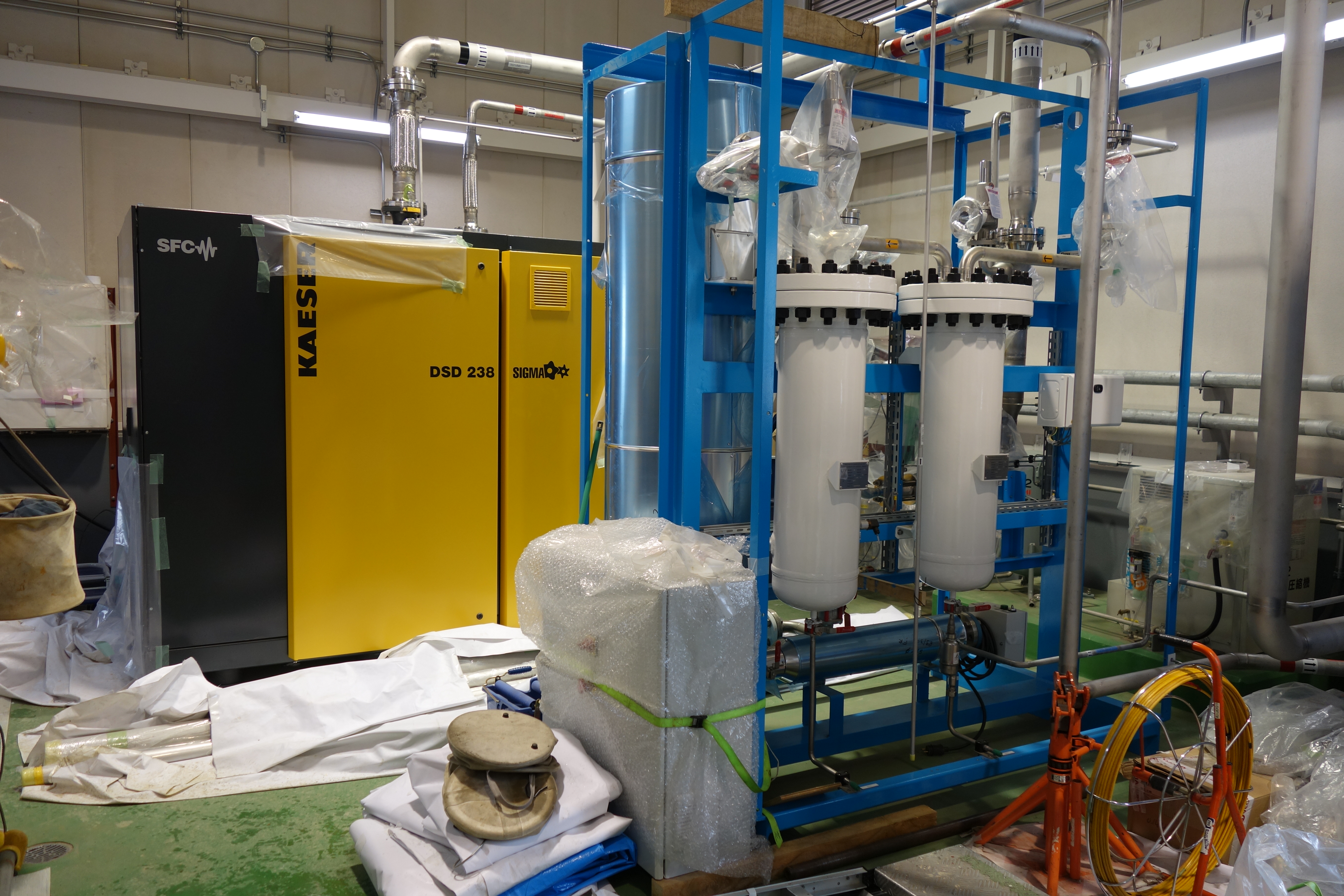
Shelter view (inside) – Helium compressor (yellow) and Oil Removal System (ORS)
HEBT/BD:
The HEBT manufacturing drawings have been completed and many components, such as the water cooling system, and associated pipe, fittings and valves; have been manufactured or procured and delivered to Rokkasho. 4 out of 5 HEBT support frames have been manufactured at CIEMAT, and manufacturing of the first quadrupole is complete. For the beam dump, the inner cone of the first prototype has been manufactured, and a second prototype is being manufactured. The acceptance tests for the beam dump shield are expected to proceed at CIEMAT in December 2016. The main steel shielding and mobile shielding manufacture is now in an advanced state, and final acceptance tests are expected in February 2017. The cooling system design continues, but manufacture will need to be accelerated to match with the current schedule.
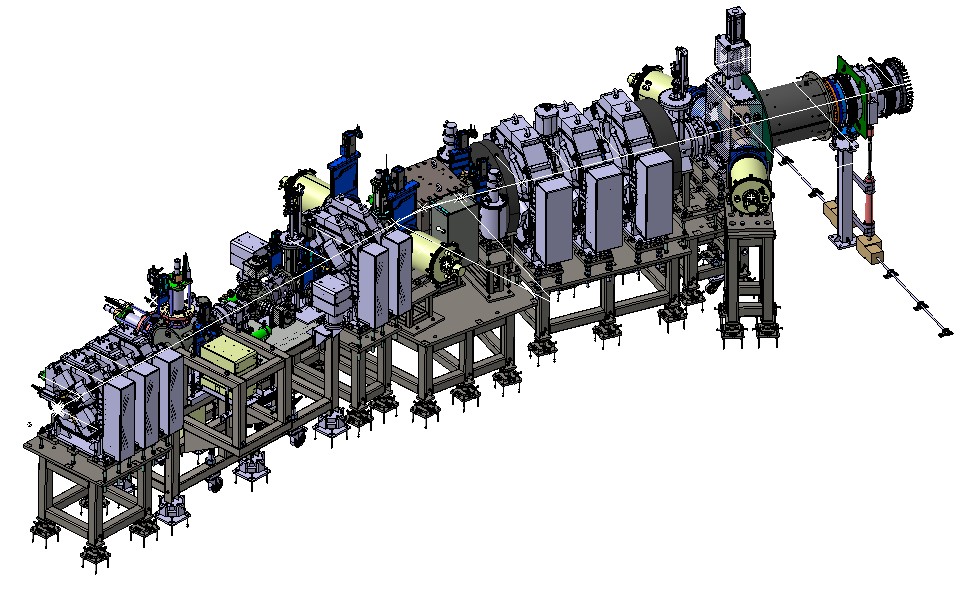
Beam Dump – 3DMock-up
HEBT 3DMock-up
Control system:
Phase B commissioning is approaching, and as such, the dedicated control configuration is required for the control system. An additional 42 signals are required, a test bench for the timing system has been prepared, and the program for data creation is being prepared. Local control system integration for phase B will include the RFQ, RF/LLRF, MEBT and D-plate. The Central Control System upgrade contract is expected to start in January 2017. Moreover the need for a beam simulation study to optimize the configuration of beam was recognized as being urgent. Data event recording tool must be implemented, and the operational screens in the control room are being prepared according to the needs of the different subsystems.
The next meeting LTM11 will be held between April and May 2017, with the location yet to be decided.
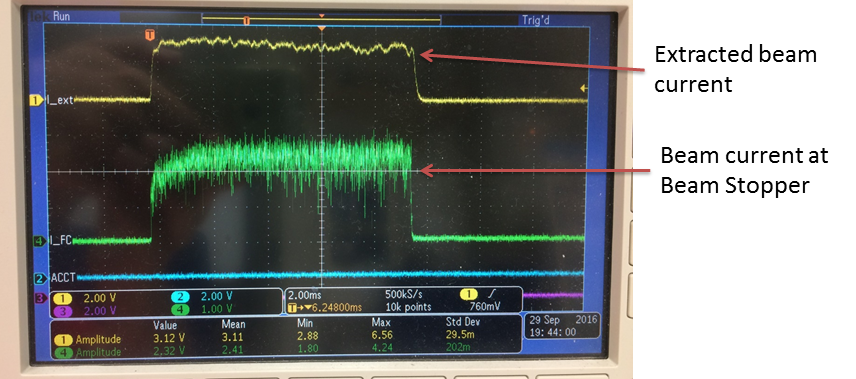
After a shutdown period of more than five months long, along which a thorough maintenance campaign on the injector took place, 90keV proton beam, with more than 100mA current, was extracted again this week, in preparation for the last injector commissioning campaign that will span over 5 weeks until November 4th.
Main beam parametersInternational team toast to the success of the last injector commissioning campaign
From October 3rd until November 4th the last campaign of the accelerator commissioning will take place. This time will be used to fine tune the source before the RFQ is finally assembled attached to it by the end of November. To assure the optimal condition of the injector for this important stage, a thorough maintenance campaign has been performed along the summer, with more than 70 interventions including vacuum system, PPS and control system upgrade, recalibration of high voltage power supplies, RF equipment and the complete cleanup and reassembly of the injector column.
In parallel, during this period, installation activities have progressed steadily. In the vault, the RFQ finalized the assembly of the four super modules and completed the bead pull measurement tests satisfactorily, in preparation for the last piping and cabling works. In addition, a task force from CIEMAT has been working on MEBT (bunchers, quadrupole magnets) and D-Plate (which hosts most of the beam instrumentation) to finalize the mechanical installation, pressure and vacuum tests and signal cabling. Regarding the RF system, all eight chains for the RFQ and two for the bunchers have been installed commissioning will start soon. Currently, coaxial transmission lines are under the final stage of installation.
On Thursday 21 April, a celebration took place as major accelerator components had been transported by F4E to the Rokkasho Fusion Centre allowing the start of second phase in the commissioning of LIPAc. This is another major milestone on road of success for the IFMIF/EVEDA Project. Already in 2013, the engineering design activities were successfully accomplished on schedule. By 2015, the Target and Test facility validation activities were fully completed, with the exception of the on-going corrosion/erosion tests in the lithium loop constructed in Brasimone by ENEA. This facility is now providing important results to quantify the corrosion/erosion rates of fusion reactor steel grades in contact with a high speed flow of liquid lithium.
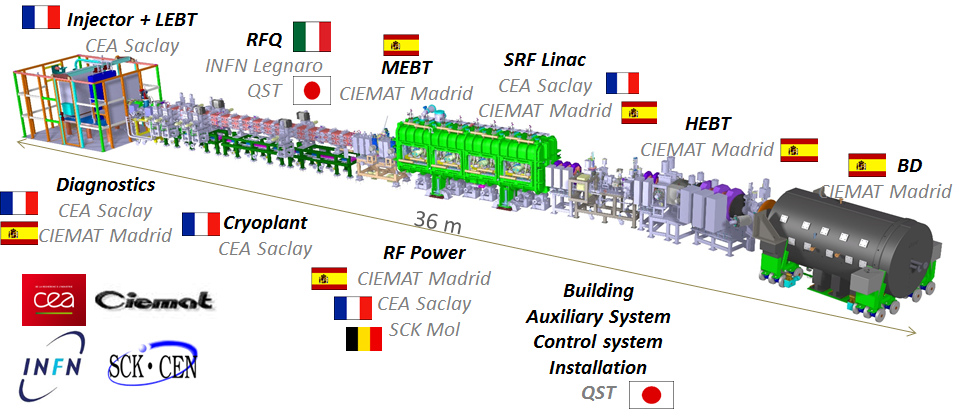
LIPAc accelerator and breackdown of contributions
The LIPAc is under installation and commissioning in Rokkasho. Its key systems are designed and manufactured mainly by CEA, CIEMAT and INFN integrating also some important components contributed by SCK-CEN (see Figure above for a breakdown of the contributions). The LIPAc is designated to operate in unprecedented beam conditions at the cutting edge of present days’ accelerators technologies. During the previous meeting of Broader Approach Steering Committee (BASC-17), hosted on 11 December 2015 by RFX, an extension of the LIPAc validation period until December 2019 was approved. The deuteron source (Injector) developed by CEA has demonstrated that the beam characteristics are achievable in a parameter field never reached before (100 kA and 140 mA deuteron beam). An operational point with protons to be used as beam input to the ensuing accelerator stage, the Radio Frequency Quadrupole (RFQ) developed by INFN, has been determined. Additional commissioning of the Injector towards the mandated operation mode in Continuous Wave, i.e. 100% duty cycle of the beam, will take place during 2016 interleaved with the preparation activities for beam commissioning with the RFQ. The RFQ now under installation at Rokkasho is the longest one ever constructed. Today 6 out of 8 RF power chains developed by CIEMAT are already installed, which are to deliver 200 kW each to operate the RFQ. The last two chains are to arrive before the summer.
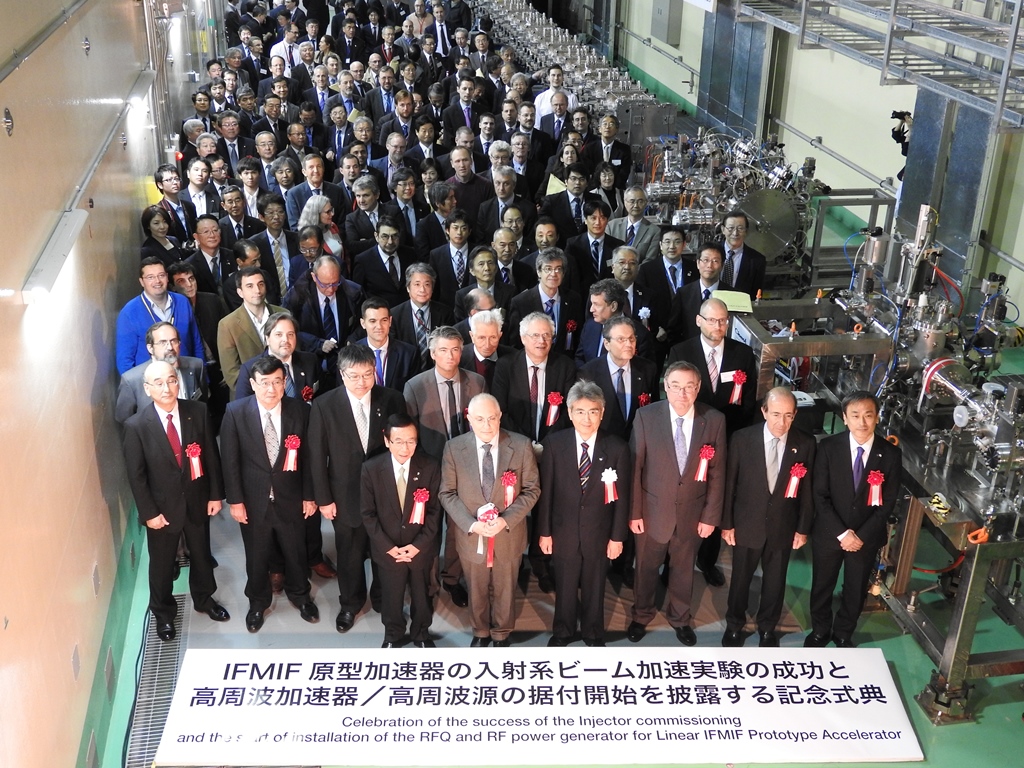
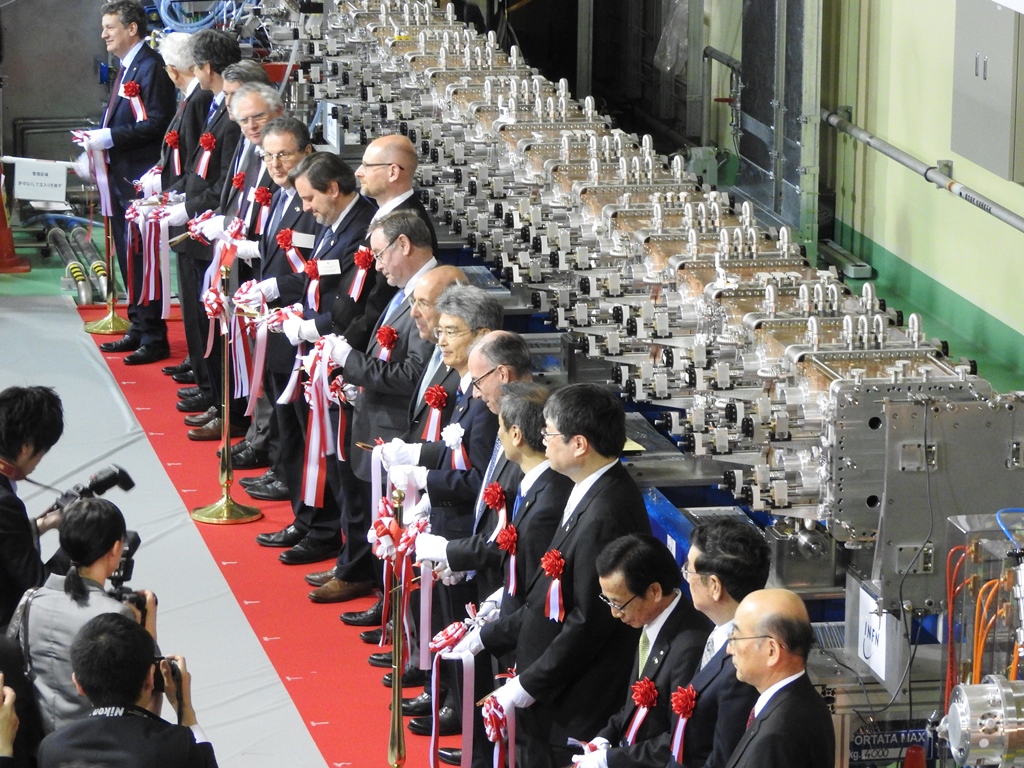
The celebration of the success of the Injector commissioning and the start of installation of the RFQ and the RF power generator for the Linear IFMIF Prototype Accelerator enjoyed utmost interest among European and Japanese partners. The celebration received the participation of representation from the European Delegation in Japan and the Embassies of all the six European countries that have been involved in the IFMIF/EVEDA project. Among the European guests were the Ambassador of Spain to Japan, Gonzalo de Benito; the Director of Nuclear Energy, Safety and ITER of the DG Energy in the European Commission, Massimo Garribba; the Chairman of the Governing Board of F4E, Joaquin Sanchez; the Chairman of CEA, Daniel Verwaerde, the member of the Executive Board of INFN, Eugenio Nappi; the Directors of INFN Legnaro, Giovanni Fiorentini, and of INFN Torino, Amedeo Staiano; Angel Ibarra from CIEMAT. Among the Japanese guests were the Governor of Aomori Prefecture, Shingo Mimura; the President of QST, Toshio Hirano; the President of JAEA (to which the Japanese Fusion programme belong to until 31 March 2016), Toshio Kodama; the Deputy Director General of Research and Development Bureau at MEXT; Shuichiro Itakura.