First warm-conditioning period completed for the LIPAc SRF Linac

On 31 July 2026, the IFMIF/EVEDA Project completed the first warm-conditioning period for the eight power couplers of the LIPAc Superconducting Radio-Frequency (SRF) Linac. This advances the fully integrated accelerator towards its first cooldown and subsequent beam commissioning.

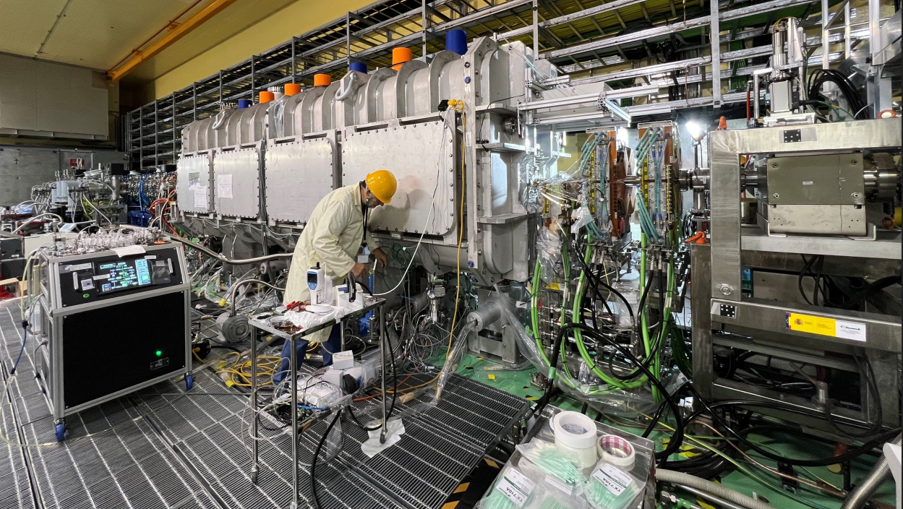
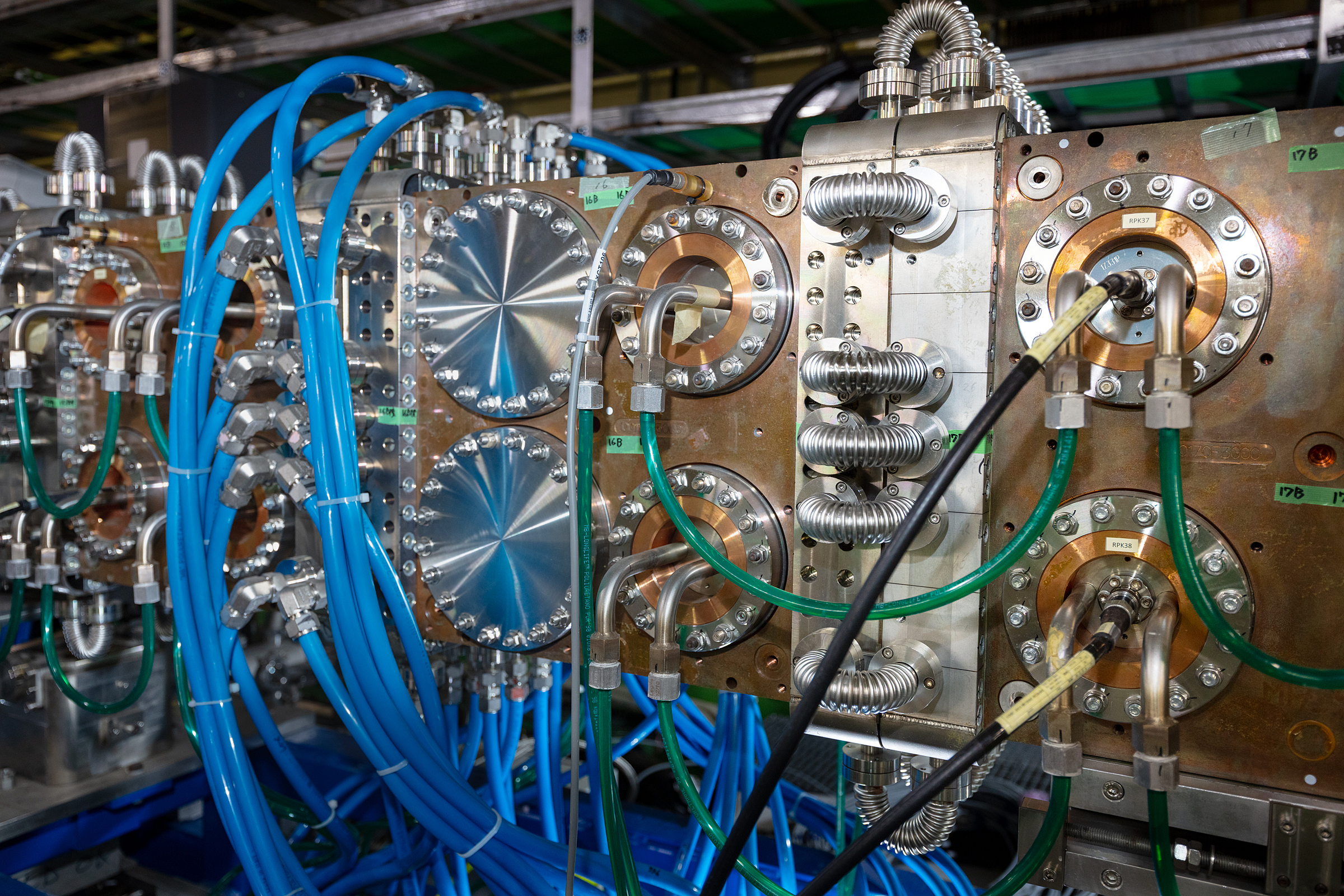
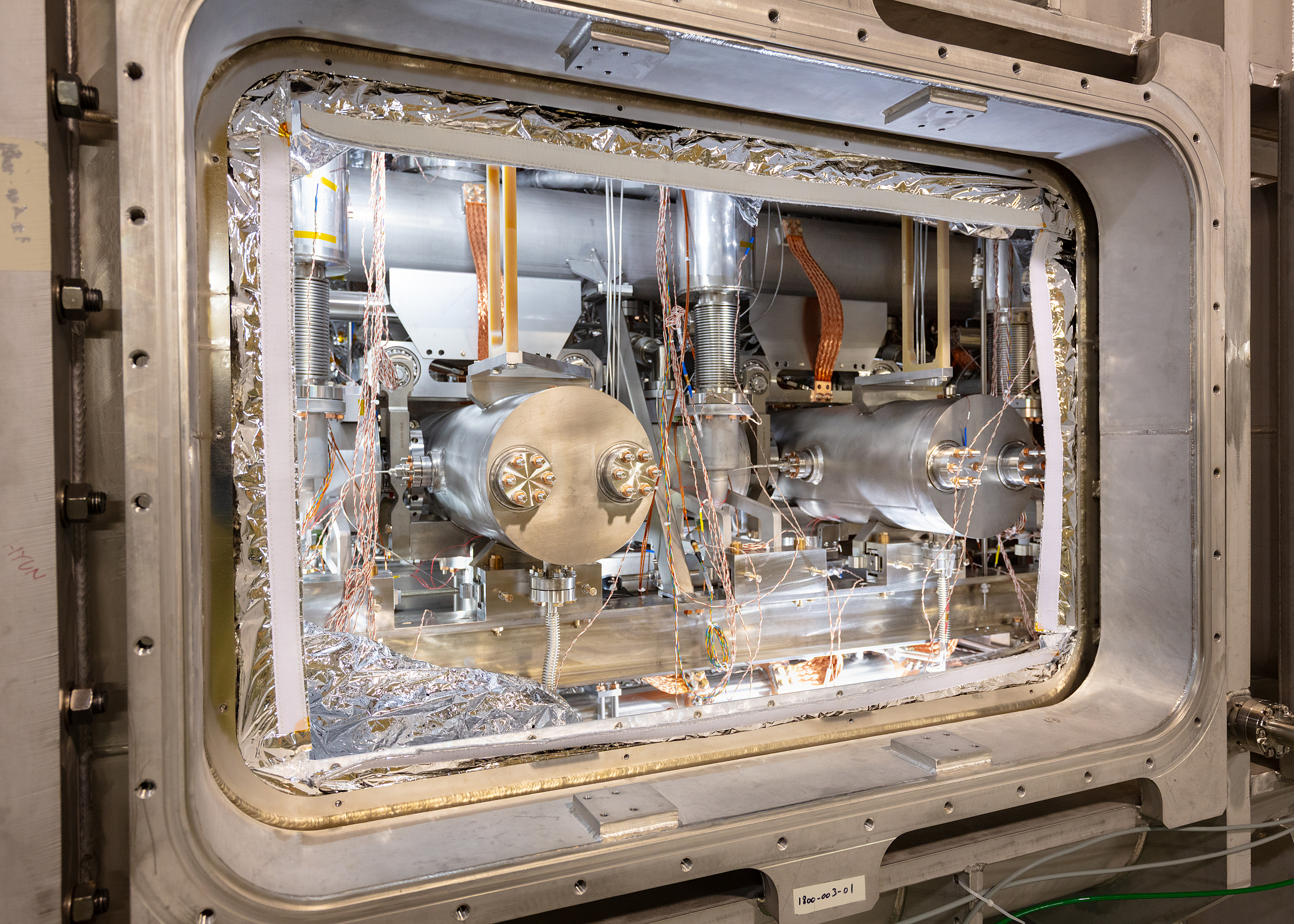
Warm conditioning began on 10 June as an essential step before operation at cryogenic temperature. The power couplers carry radio-frequency (RF) power from the sources to the eight superconducting cavities that will accelerate the beam. At room temperature, power is raised gradually while the team monitors vacuum, temperature and electrical discharges, and verifies the control and protection systems.
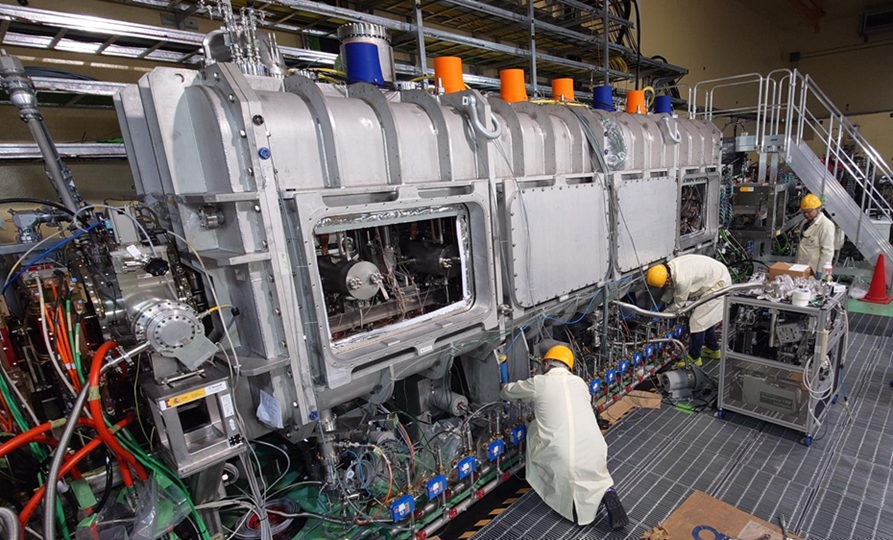
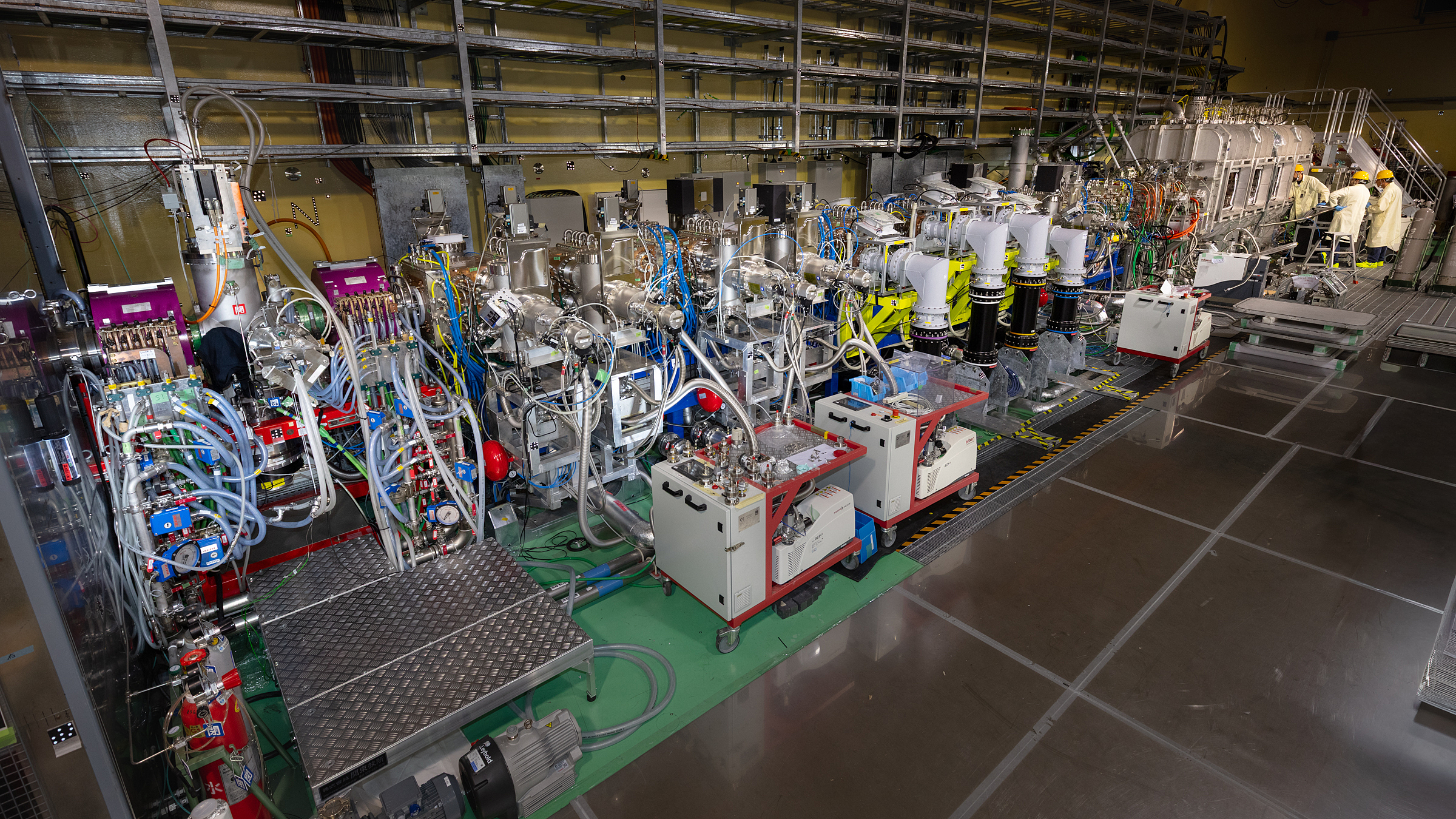
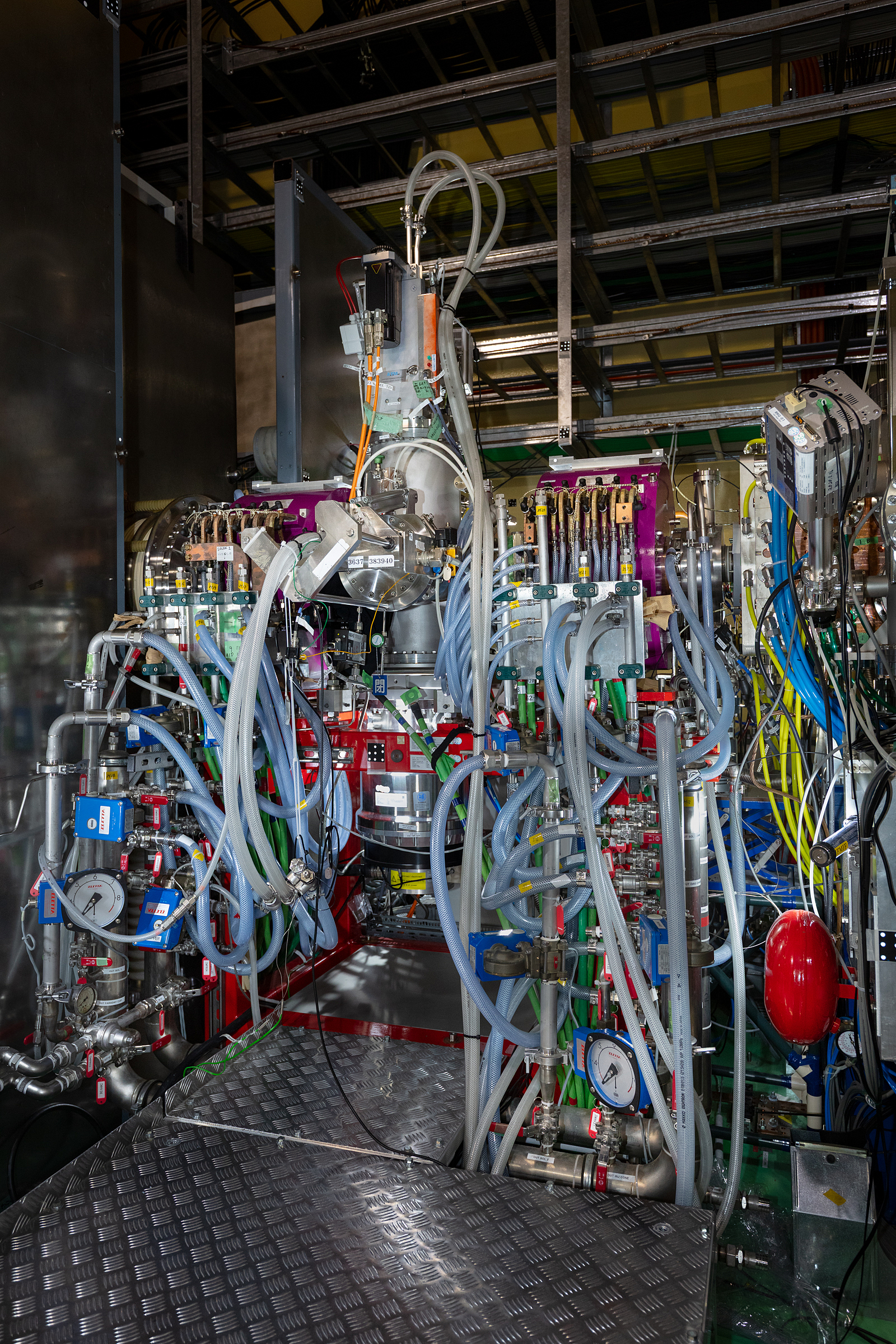
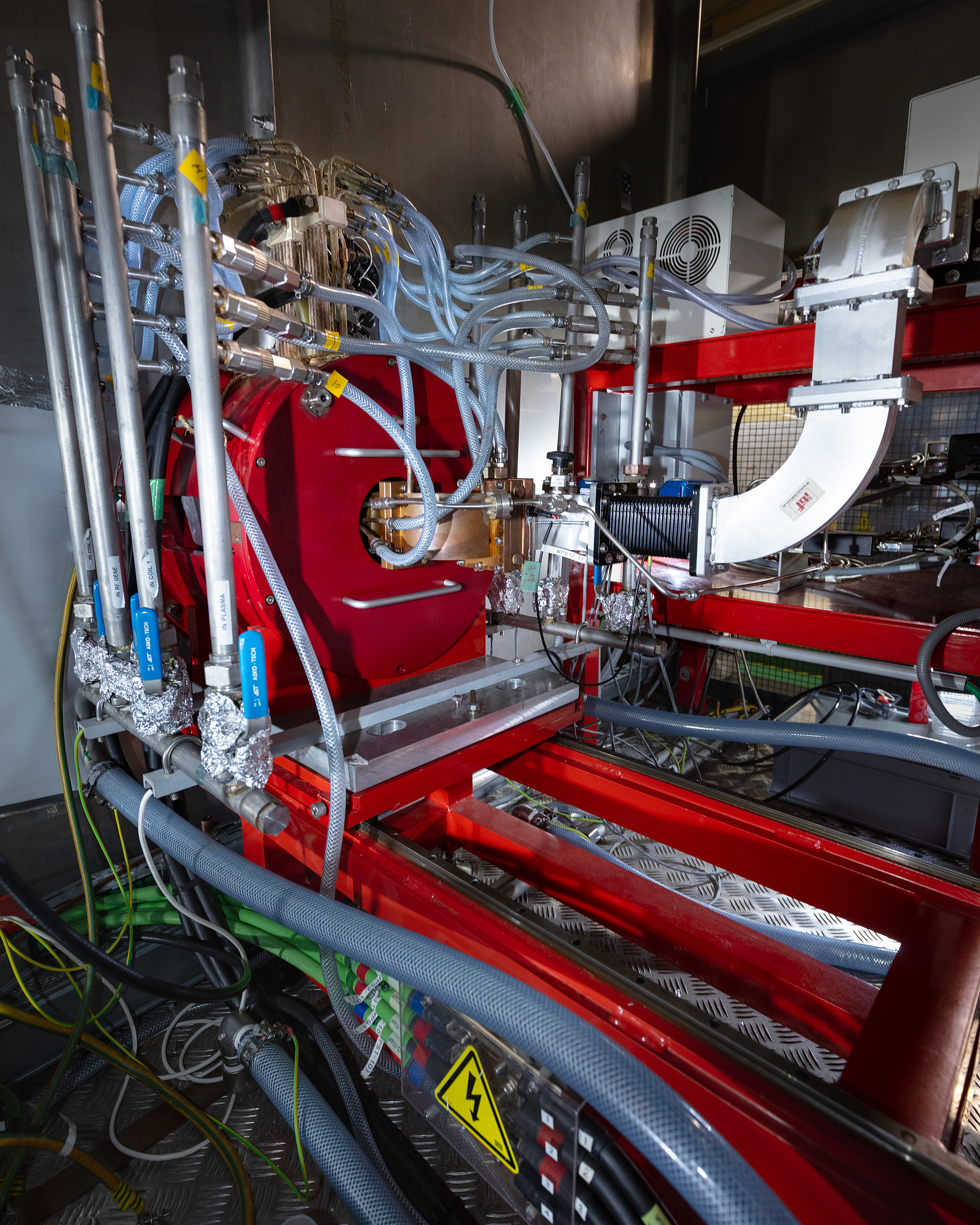
The LIPAc SRF Linac during warm conditioning preparation activities at Rokkasho.

During this first period, four of the eight couplers reached individually continuous-wave operation between 25 and 32 kW, exceeding the 20 kW objective presented at Project Committee #37. Three more underwent useful conditioning or testing, so progress was achieved on seven of the eight couplers.

These results provide an important preparatory validation of the SRF Linac’s RF power delivery and control systems. When powered, multipacting can occur, then electrons repeatedly strike internal surfaces, releasing more electrons and temporarily limiting power transmission. Controlled conditioning progressively reduces this effect, allowing the couplers to reach stable operating conditions.

Continuous-wave operation means sustained power rather than short pulses. Progress on three other couplers strengthens confidence in completing the campaign and proceeding to cooldown. Validation at cryogenic temperature and with beam will follow.

The second warm-conditioning period, scheduled to begin in October, will provide approximately the same conditioning time to complete the remaining couplers and consolidate the results already achieved.
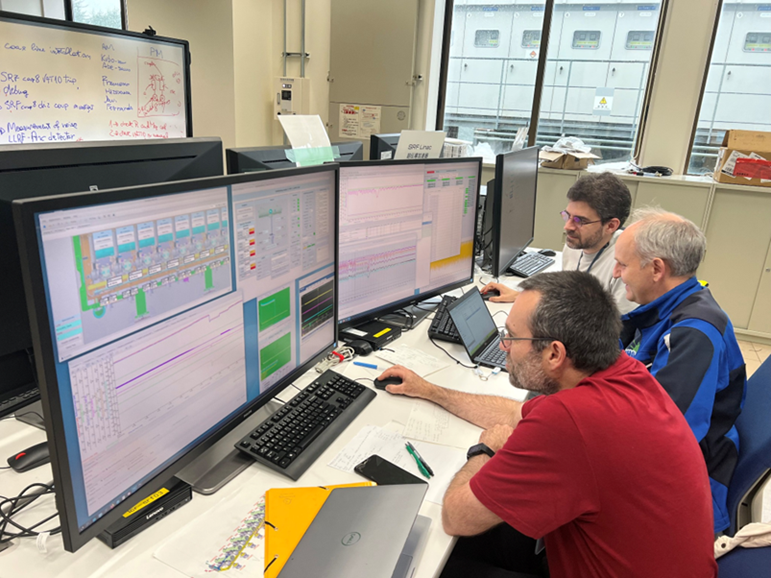
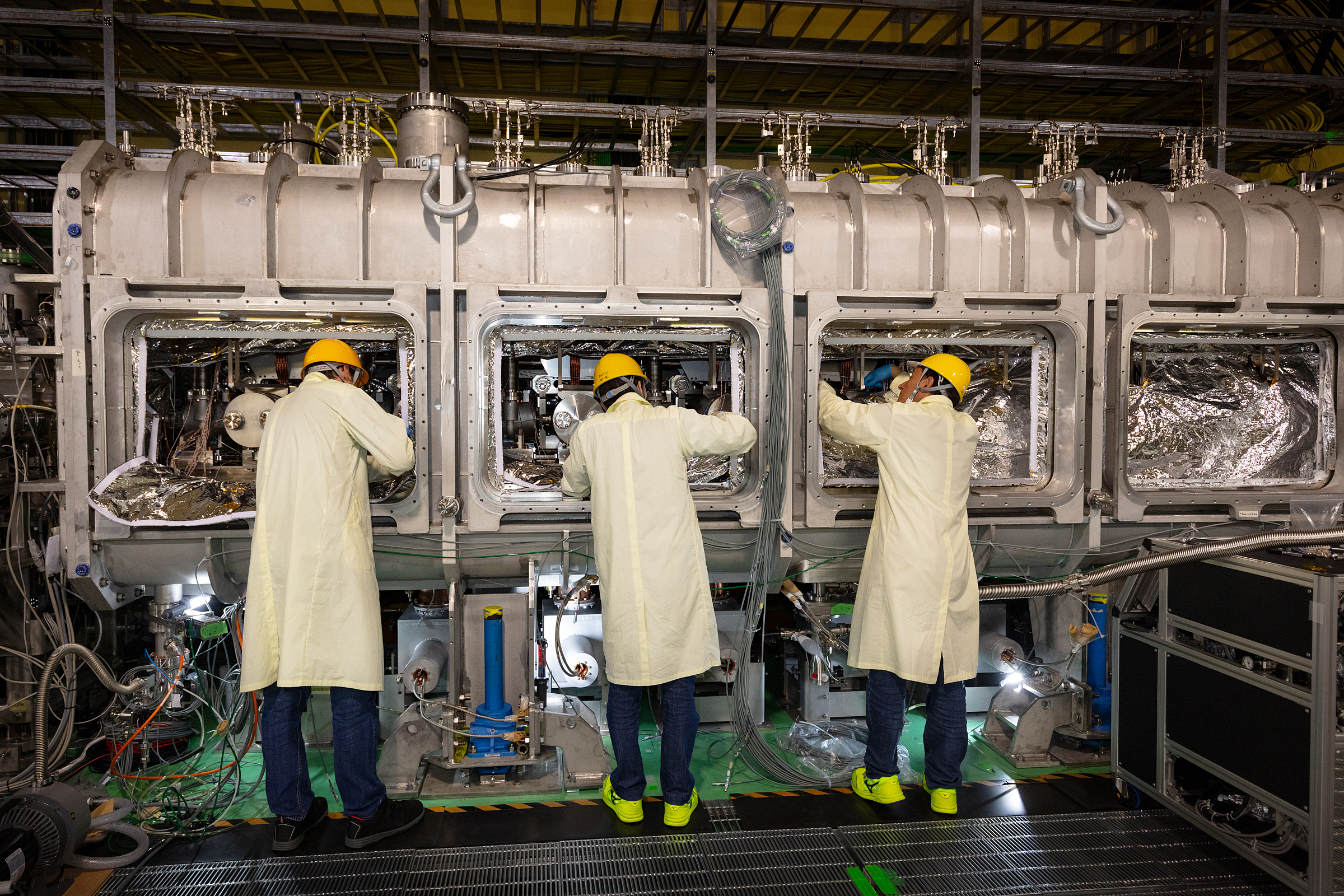
RF experts monitoring the warm conditioning of the LIPAc SRF Linac power couplers.

This milestone is another important step in the LIPAc roadmap, reflecting close coordination among the Integrated Project Team, contributing institutes and contractors. The IFMIF/EVEDA Project thanks all Contributing Institutes and Contractors for their commitment and responsiveness.
Marc Lachaise, F4E Director, visits LIPAc in Rokkasho

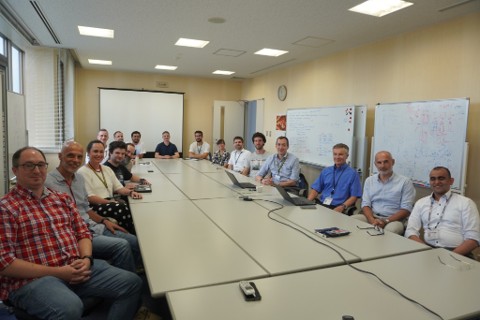
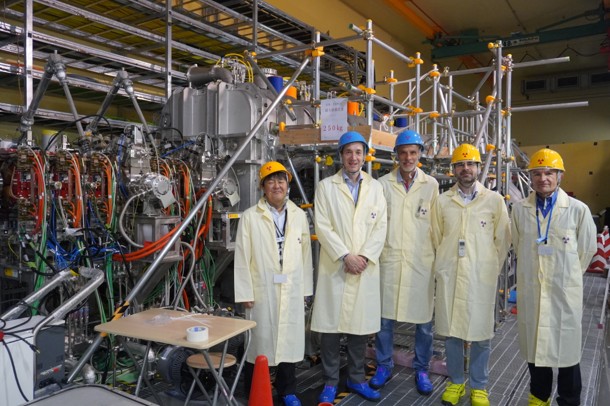
Marc Lachaise with QST and IFMIF/EVEDA representatives during the visit to the LIPAc accelerator vault.

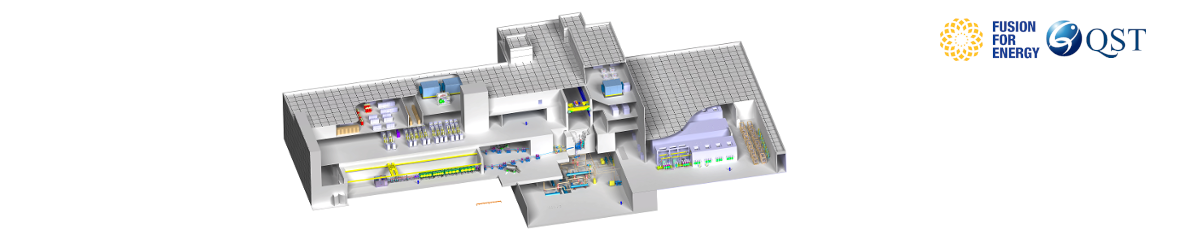
On 22 July 2026, Marc Lachaise, Director of Fusion for Energy (F4E), visited the IFMIF/EVEDA Project at QST, Rokkasho. The visit provided an opportunity for discussions with QST management, the Japanese and European teams involved in LIPAc. They discussed its progress, the priorities for the forthcoming commissioning phases, its contribution to IFMIF-DONES and future fusion neutron sources.

During a tour of the accelerator vault, Marc Lachaise saw the superconducting linac and the ongoing preparations for the next major commissioning milestones. His exchanges with team members addressed both the achievements to date and the technical challenges involved in bringing this unique high-current accelerator into operation.

“I would like to praise the work and contribution of the EU team in close collaboration with QST. During my visit and throughout the exchanges with members of the team, I was able to witness the remarkable progress of LIPAc. Thanks to all of you the link between LIPAc and IFMIF-DONES is stronger, connecting Europe and Japan. I would like to congratulate both parties for the exemplary collaboration at the service of the fusion community,” stated Marc Lachaise.

The visit highlighted the firm commitment of all contributors and the value of the long-standing EU-Japan partnership in advancing accelerator technologies for fusion materials research.

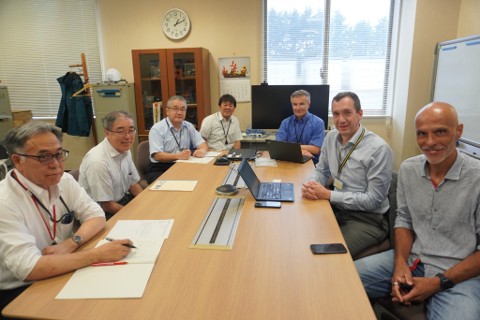
Discussions with QST management on LIPAc’s progress, commissioning priorities and future perspectives.
Exchange with members of the European teams contributing to LIPAc commissioning.

Start of warm conditioning of the LIPAc SRF Linac

On 10 June 2026, just after 14:00, the IFMIF/EVEDA Project reached an important milestone with the start of warm conditioning of the LIPAc Superconducting Radio-Frequency Linac, now integrated into the beam line.

Warm conditioning is an essential preparation step performed at room temperature before operation at cryogenic temperature. During this phase, radio-frequency power is progressively injected into the RF power couplers, while the superconducting cavities are kept detuned. This process allows the couplers and associated RF systems to be gradually brought to their operating conditions under carefully monitoring. This activity began in line with the accelerated schedule presented at Project Committee #37 and marks the first RF injection into the one of the eight power couplers of the integrated SRF Linac. The initial operation progressed well, with this first coupler under conditioning behaving as expected.

During the first RF injections, the team monitored the cavity and coupler parameters through dedicated operator interfaces, including the RF power delivered to the coupler, the reflected power, the vacuum response and the photomultiplier signals. The observed vacuum activity and light signals are consistent with the expected conditioning behaviour, in particular considering that the couplers had been stored under nitrogen for several years after their initial conditioning before assembly.

SRF Linac area being prepared for warm conditioning
The SRF Linac and associated systems were prepared for the start of warm conditioning, following intensive coordination between the Project Team, CEA and QST teams.

Following these encouraging first results, the conditioning campaign is now continuing in automatic mode during the nights, with continuous monitoring provided by the QST contractor. This allows the conditioning process to progress efficiently while maintaining the required level of operational supervision.

The successful start of warm conditioning represents a significant step forward in the preparation of the forthcoming beam commissioning activities and confirms the strong progress being made by the IFMIF/EVEDA Project team.

LIPAc reaches full accelerator configuration

A decisive step towards record light hadron beam performance and IFMIF-DONES validation

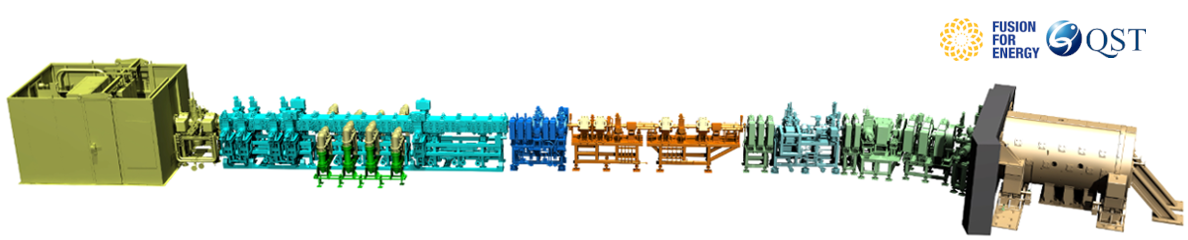
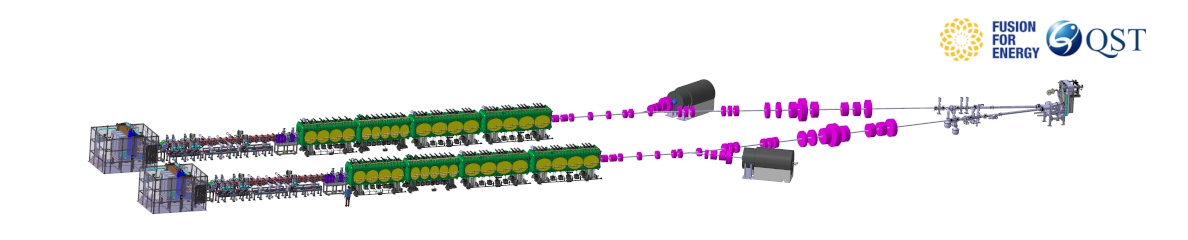
Complete LIPAc accelerator beam line with Project Team members working on the cryomodule

Europe and Japan have brought LIPAc to its full accelerator configuration in Rokkasho, Japan.
This milestone marks a decisive step for the IFMIF/EVEDA project and the future of fusion materials testing. With all major subsystems now installed, the 36-meters accelerator is ready to enter its next commissioning phase.

At its core, the SRF section aims at accelerating particles up to 9 MeV at 125 mA in continuous-wave operation. This highly demanding regime is essential to reduce the main technical risks for future fusion neutron source facilities such as IFMIF-DONES and A-FNS.

With assembly completed, the teams will now proceed with progressive commissioning, including RF conditioning, cryogenic operation and integrated tests. Warm conditioning is planned to start in June 2026 and beam operations are planned to start by March 2027, first with protons and then with deuterons. LIPAc now enters a decisive phase to turn years of European-Japanese collaboration into demonstrated accelerator capability.

HEBT
Zoom on the RFQ
LEBT
Injector plasma chamber, coils and RF guides
Operation on-going on the SRF system
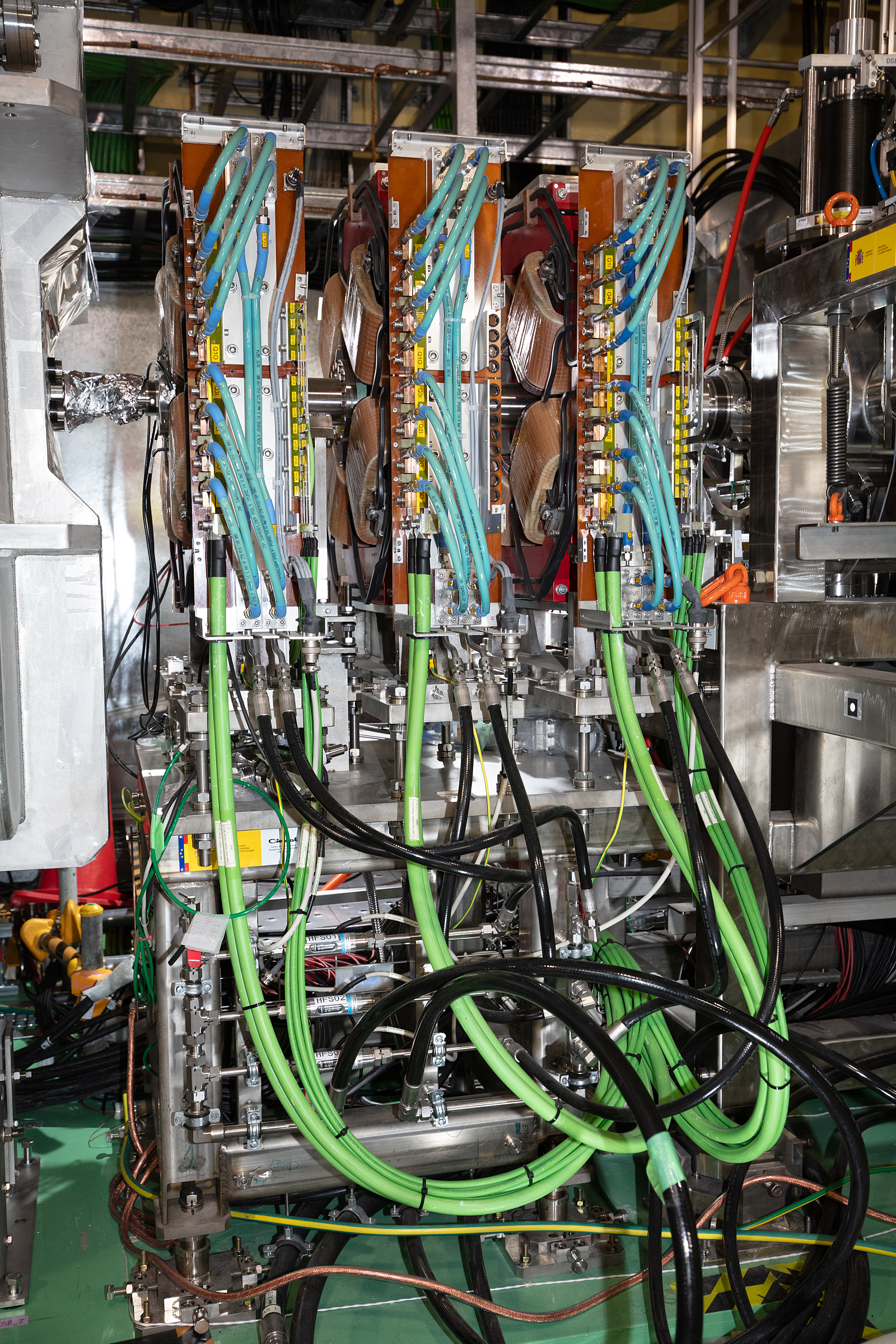
Focus on SRF cavities